
A dental bridge can feel completely normal one day and suddenly loose, sharp, painful, or broken the next. That can be stressful, especially if you feel a gap, cannot chew properly, or worry that the bridge may fall out while eating or sleeping. The safest first step is simple: protect the area, avoid chewing on that side, save any broken pieces, and call a dentist as soon as possible. We do not recommend trying to glue the bridge back at home because the problem may involve the bridge, the supporting teeth, the gums, the bite, or hidden decay under the bridge.
At Park St Dental Practice, we help patients with urgent dental concerns, including loose restorations, pain, broken dental work, and damage that affects chewing or comfort. If your dental bridge has come loose, cracked, chipped, or fallen out, we can assess the cause and explain whether it can be re-cemented, repaired, stabilised, or replaced.
What Should I Do If My Dental Bridge Breaks or Comes Loose?
If your dental bridge breaks, loosens, or falls out, stop chewing on that side, save the bridge or fragments, rinse your mouth gently with warm water or warm salt water, and contact a dentist. Do not use superglue, hardware store adhesives, or force the bridge back into place. A dentist needs to check the bridge, abutment teeth, gums, bite, and X-rays before choosing the right repair.
Follow these steps while waiting for your appointment:
- Stop chewing on the affected side.
- Save the bridge or broken fragments in a clean container.
- Rinse your mouth gently with warm water.
- Use warm salt water if the gums feel irritated.
- Use dental wax only if a sharp edge is rubbing your cheek or tongue.
- Eat soft foods until your dentist checks the bridge.
- Call your regular dentist or an emergency dentist.
- Seek urgent help for swelling, severe pain, bleeding, trauma, pus, or fever.
- Do not use superglue or household adhesive.
- Do not force the bridge back onto your teeth.
When Is Dental Bridge Damage an Emergency?
Dental bridge damage should be treated as urgent if the bridge is loose, detached, painful, sharp, or linked with swelling, bleeding, infection signs, or trauma. Even if the bridge does not hurt, movement can place pressure on the supporting teeth and gums. A bridge is meant to fit accurately. If it shifts, rocks, or no longer feels right, the safest plan is to have it checked before more damage occurs. A dental bridge depends on healthy supporting teeth or implants. If the bridge is loose because the cement has failed, repair may be simple. If it is loose because of decay, gum disease, tooth fracture, or bite pressure, the treatment may be different. That is why diagnosis matters before repair.
Same-Day Dental Care Is Needed If the Bridge Is Loose, Detached or Painful
A loose, detached, or painful dental bridge should be checked as soon as possible because it can affect the teeth holding it in place. If you keep chewing on a loose bridge, the movement may irritate the gums, damage the abutment teeth, or make the bridge fit worse. If the bridge is so loose that you could swallow it, remove it only if it comes away easily and store it safely. Pain under a bridge can mean several things. It may be caused by bite pressure, exposed tooth structure, decay under the bridge, gum inflammation, or a cracked supporting tooth. Since these problems are hard to see at home, same-day dental care is often the best option.
Swelling, Bleeding, Bad Taste or Pus May Mean Infection
Swelling, bleeding, bad taste, pus, or a pimple-like swelling on the gum can point to infection or inflammation. This may happen if bacteria have collected under the bridge, if decay has developed around the bridge margin, or if an abutment tooth has a deeper problem. Do not ignore these signs, even if pain comes and goes. Dental infections can worsen and may need prompt care. If you have facial swelling, fever, difficulty swallowing, or feel very unwell, seek urgent medical or dental help.
Trauma-Related Bridge Damage Should Be Checked Quickly
If your bridge was damaged during a fall, sports injury, car accident, or hit to the face, book urgent dental care. Dental trauma can damage the bridge, nearby natural teeth, gums, lips, jaw, or bone. Sometimes the bridge is the visible problem, but the supporting teeth may also be cracked or loosened. For heavy bleeding, major facial injury, severe swelling, or breathing difficulty, a hospital emergency department may be needed first. After the urgent medical risk is managed, a dentist can assess the bridge and teeth.
Small Chips May Be Less Urgent but Still Need a Dentist
A small chip, rough edge, or minor porcelain fracture may not need immediate emergency care if there is no pain, swelling, or exposed tooth. Still, it should be checked. A small chip can become a larger fracture if the bite is uneven or if you chew hard foods on the damaged area. If the rough edge is cutting your tongue or cheek, use dental wax for comfort and call a dentist. Do not file the bridge yourself.
Safe First Steps Before Your Dental Appointment
The aim before your appointment is to keep the area clean, prevent further damage, and avoid unsafe home repair. You do not need to solve the problem yourself. A bridge must be assessed for fit, stability, decay, gum health, and bite pressure before it can be repaired safely.
Save the Bridge or Fragments in a Clean Container
If your dental bridge has fallen out or pieces have broken away, place them in a small clean container and bring them to your appointment. Do not wrap the bridge in tissue or a napkin because it can be thrown away by mistake. Even small fragments can help the dentist understand what happened. The bridge may be reusable in some cases, but this depends on whether it fits properly and whether the supporting teeth are healthy.
Rinse Gently and Keep the Area Clean
Rinse your mouth gently with warm water. If the gums feel irritated, a warm salt water rinse may help keep the area clean and reduce discomfort. Do not scrub exposed teeth or gums aggressively. If food is trapped around the bridge, rinse gently and use care. Do not poke the area with sharp objects, toothpicks, pins, or metal tools. These can cut the gums or damage the tooth surface.
Avoid Chewing on the Affected Side
Chewing on a loose or broken bridge can make the damage worse. It can also place pressure on the supporting teeth and gums. Until your dentist checks the bridge, chew on the other side and choose soft foods. Good short-term food choices include soup, yoghurt, scrambled eggs, soft pasta, mashed vegetables, smoothies, and soft rice dishes. Avoid hard, sticky, crunchy, or chewy foods until you have been assessed.
Cover Sharp Edges With Dental Wax if Needed
If a sharp edge is rubbing your cheek, tongue, or lip, dental wax from a pharmacy may help protect the soft tissue for a short time. Dry the area gently, place a small amount of wax over the sharp edge, and avoid chewing on it. Dental wax is only for comfort. It does not repair the bridge or make it safe to chew normally.
Use Pain Relief Safely if Suitable
If you have discomfort, you may use over-the-counter pain relief if it is safe for you and you follow the label directions. Some medicines are not suitable for certain medical conditions, pregnancy, allergies, or other medications, so use care. Do not place aspirin directly on the tooth or gum. It can burn the soft tissue and make the area more irritated.
What Not to Do With a Broken or Loose Dental Bridge
A damaged bridge can feel urgent, and it is natural to want a fast fix. The problem is that home repairs can make the situation worse. A bridge must fit accurately. If it is glued in the wrong position, it can damage the bite, trap bacteria, irritate the gums, or make professional repair harder. This section is important because many patients search for “how to fix a loose dental bridge at home.” We understand why, but our advice is clear: protect the bridge and call a dentist.
Do Not Use Superglue or Hardware Store Adhesives
Superglue, craft glue, and hardware store adhesives are not safe for the mouth. They can irritate gum tissue, damage the bridge surface, trap bacteria, and make it harder for the dentist to clean and repair the bridge properly. Even if the bridge seems to stick temporarily, it may not be seated correctly. A poor fit can create bite pain, gum irritation, and new damage.
Do Not Force a Detached Bridge Back Onto the Teeth
If a bridge has come out, do not push it back hard onto your teeth. The fit may have changed because of old cement, decay, swelling, or fracture. Forcing it can damage the abutment teeth or gums. A dentist needs to check the inside of the bridge and the teeth underneath before re-cementing it. This helps prevent sealing decay, bacteria, or infection under the restoration.
Do Not Sleep With a Very Loose Bridge in Your Mouth
If the bridge is very loose and could come out while you sleep, it may be a choking or swallowing risk. If it is fully detached and comes away easily, store it safely in a clean container and call a dentist. If it is partly attached, do not pull it off. Call for dental advice and avoid chewing on that side.
Do Not Keep Eating Hard, Sticky or Chewy Foods
Hard foods can crack porcelain or stress the bridge. Sticky foods can pull at the bridge and loosen it further. Chewy foods can create repeated pressure on already weakened dental cement. Avoid ice, hard lollies, nuts, popcorn kernels, sticky caramels, toffees, crusty bread, chewing gum, and tough meat until the bridge is checked.
Do Not Ignore Pain or Swelling
Pain, swelling, bad taste, bleeding, or pus may mean there is decay, infection, gum disease, or damage under the bridge. These problems often do not fix themselves. If the bridge feels wrong and your gum is sore or swollen, book care promptly. Early treatment may reduce the chance of needing more involved dental work.
Why Dental Bridges Break, Loosen or Fall Out
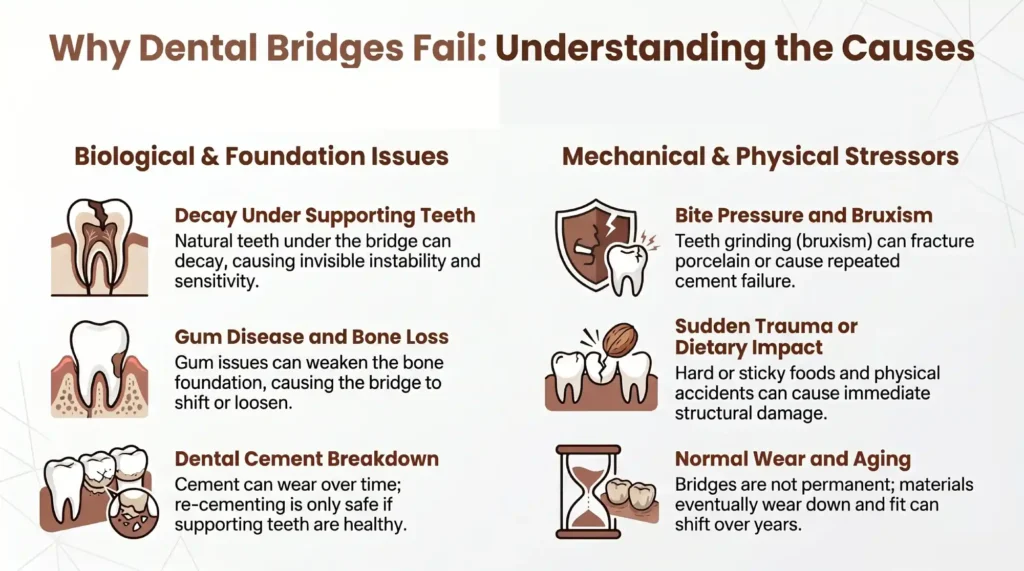
A bridge can fail for many reasons. Sometimes the dental cement simply weakens after years of use. In other cases, the bridge loosens because of decay under the crowns, gum disease, bite pressure, trauma, or normal wear. Understanding the cause matters because the right treatment depends on the real problem. A bridge that has fallen out is not always a simple cement issue. The dentist must check the bridge and the teeth holding it before deciding whether repair is safe.
Dental Cement Can Weaken Over Time
Dental cement holds a bridge in place. Over time, cement can break down, especially if there is heavy bite pressure, leakage around the edges, or wear at the bridge margins. If the bridge is still intact and the supporting teeth are healthy, re-cementing may be possible. This is one of the more straightforward bridge repairs, but it still needs a dental assessment. Re-cementing a bridge over decay or poor fit can lead to bigger problems later.
Decay Under the Bridge Can Weaken Support
The false tooth part of a bridge cannot decay, but the natural teeth supporting the bridge can. Decay can develop around the bridge margins if plaque collects near the gumline or under the bridge. Decay under a bridge may not be visible in the mirror. You may notice sensitivity, bad taste, food trapping, pain, or looseness. Dental X-rays may be needed to check the supporting teeth.
Gum Disease or Bone Loss Can Affect Stability
Gum disease can affect the tissues and bone around the supporting teeth. If the teeth holding the bridge become less stable, the bridge may move, feel uncomfortable, or no longer fit as it should. This is one reason regular dental check-ups are important. A dentist can often detect gum and bone changes before a bridge becomes loose.
Bite Pressure and Teeth Grinding Can Damage the Bridge
Teeth grinding and clenching can place heavy pressure on bridges, crowns, natural teeth, and implants. Over time, this can cause porcelain fracture, cracks, screw loosening in implant bridges, or repeated cement failure. If we see signs of bruxism, jaw pain, tooth wear, or repeated bridge damage, we may discuss a custom-fitted nightguard. Protecting the bite can help protect the bridge.
Hard Foods, Sticky Foods and Dental Trauma Can Cause Sudden Damage
A bridge may crack or loosen after biting something hard, pulling on sticky food, or being hit during sport or an accident. Even a strong dental bridge has limits. If a bridge breaks after trauma, we need to check nearby teeth and soft tissue as well. The bridge damage may be part of a wider dental injury.
Older bridges can wear, crack, or Stop Fitting Well
Dental bridges can last many years, but they are not permanent. Materials wear, gums change, teeth move, and bite pressure can shift over time. A bridge that fitted well years ago may begin to trap food, feel high, or loosen. If an older bridge keeps causing problems, replacement may be more reliable than repeated repair.
How a Dentist Assesses a Dental Bridge Emergency
A proper bridge assessment is the difference between a quick temporary fix and a safe long-term solution. We need to know why the bridge failed before we decide how to repair it. That usually means checking the bridge itself, the supporting teeth, the gums, the bite, and sometimes taking X-rays. At Park St Dental Practice, we aim to relieve discomfort, protect the teeth, and explain the treatment choices clearly.
Bridge Assessment
We check whether the bridge is loose, cracked, chipped, sharp, detached, or sitting high in the bite. We also check whether it still seats properly over the teeth or implants. If the bridge does not fit accurately, re-cementing may not be safe. A poor fit can trap plaque and create pressure points.
Abutment Teeth Assessment
Abutment teeth are the teeth that support a traditional bridge. These teeth must be strong enough to hold the bridge. We check for decay, cracks, sensitivity, mobility, old fillings, and damage under the crowns. If an abutment tooth is weak or infected, the bridge problem may be a sign of a deeper issue.
Gum and Infection Assessment
The gums around a bridge can show signs of irritation, swelling, bleeding, abscess, or infection. We check the soft tissue to see whether the bridge has been rubbing, trapping food, or allowing bacteria under the margins. If infection is present, the first step may be to manage the infection and protect the tooth before final bridge repair.
X-Rays or Diagnostic Imaging
X-rays can show problems that are not visible during a normal exam. These may include decay under the bridge, root infection, bone loss, abscess formation, or damage to the supporting teeth. In some cases, imaging helps us decide whether the bridge can be re-cemented or whether a new plan is needed.
Bite and Bridge Stability Check
A bridge must fit the bite properly. If it hits too hard when you chew, it may loosen, crack, or cause pain. We check the bite and look for signs of grinding, clenching, jaw strain, or uneven pressure. A bite adjustment or nightguard may be part of the repair plan if force caused the problem.
When Bridge Replacement Is Better Than Repair
Repair is useful when the bridge is sound and the supporting teeth are healthy. Replacement may be better when the bridge is badly cracked, does not fit, keeps coming loose, or has decay under it. A replacement may also be needed if the bridge no longer suits your bite or appearance. The goal is not to keep an old bridge at all costs. The goal is to protect your oral health and restore chewing, comfort, and confidence.
The Bridge Is Badly Cracked or No Longer Fits
A bridge must sit accurately. If it is warped, fractured, or does not seat fully, re-cementing it may trap plaque and irritate the gums. It may also place uneven pressure on the teeth. In this case, a new bridge may be safer and more comfortable.
The Abutment Teeth Are Decayed, Weak or Cracked
A bridge is only as strong as the teeth or implants supporting it. If the abutment teeth are badly decayed, cracked, mobile, or infected, the old bridge may no longer be reliable. Treatment may involve repairing the teeth, placing new crowns, planning a new bridge, or considering other options such as dental implants.
The Bridge Keeps Coming Loose
A bridge that comes loose again and again usually has an underlying reason. It may be poor fit, bite pressure, decay, gum disease, or weak cement margins.
Repeated re-cementing without fixing the cause may waste time and increase the risk of tooth damage.
The Bite Has Changed
Teeth can shift. Restorations can wear. Missing teeth can change bite balance. If your bite has changed, an older bridge may no longer meet the opposing teeth correctly. A new bridge may be needed if the old one no longer supports comfortable chewing.
Cosmetic or Material Damage Is Too Extensive
If porcelain is badly fractured, stained, worn, or exposing metal, repair may not give a result that looks or lasts well. A new bridge can restore shape, colour, bite, and function more predictably. This is especially important for front teeth where appearance and speech are major concerns.
Dental Bridge Repair Cost in Australia
The cost of dental bridge repair in Australia depends on the problem. A simple re-cement may cost less than treating decay, repairing a fracture, taking X-rays, or making a new bridge. Since the cause is often hidden, an accurate quote usually comes after a dental assessment. We avoid guessing before we see the bridge because a loose bridge can look simple but involve decay, infection, bite problems, or damaged teeth underneath.
Why the Cost Can Vary
Costs can vary based on:
- Whether the bridge needs re-cementing only
- Whether X-rays or diagnostic imaging are needed
- Whether there is tooth decay under the bridge
- Whether root canal treatment is required
- Whether a chip can be bonded or polished
- Whether the bridge needs dental laboratory repair
- Whether a new bridge is needed
- The number of teeth involved
- The bridge material
- The complexity of the bite
- Whether temporary care is needed first
A single appointment repair and a full bridge replacement are very different treatments, so the price range can be wide.
Why a Dentist Must Assess It Before Giving a Quote
A dentist needs to check the bridge, gums, supporting teeth, bite, and X-rays before giving clear options. If the bridge came loose because cement failed, the plan may be simple. If it came loose because the tooth underneath has decay, the plan may involve more steps. This assessment protects you from paying for a repair that will fail again.
Can Private Health Insurance Help?
Some Australian private health insurance extras policies may contribute to major dental services, depending on your cover, waiting periods, yearly limits, and item numbers. Bridge repairs, crowns, root canal treatment, and replacement bridges may fall under different categories. After assessment, we can explain the treatment details so you can check your cover with your health fund.
How to Prevent Another Dental Bridge Emergency
Prevention starts with daily cleaning and regular check-ups. A bridge can last longer when the supporting teeth stay healthy, the gums remain clean, and the bite is managed. Many bridge emergencies begin as small changes, such as food trapping, plaque near the margin, or grinding pressure. If you have a bridge, do not wait until it hurts. Routine dental visits help us find early warning signs.
Keep Bridge Margins Clean Every Day
Bridge margins are the edges where the bridge meets the tooth. Plaque can collect here and increase the risk of decay under the bridge. Clean these areas daily with a toothbrush and the tools recommended by your dentist. If your gums bleed around the bridge, it may be a sign that cleaning needs improvement or that the area needs professional care.
Clean Under the Pontic Properly
The pontic is the false tooth part of a bridge. Food and plaque can collect underneath it. Since bridge teeth are joined together, normal floss cannot pass between them like it does between natural teeth.
Avoid High-Risk Foods and Habits
Avoid chewing ice, biting fingernails, opening packets with your teeth, and regularly eating very hard or sticky foods on the bridge. These habits can chip porcelain, loosen cement, or strain the supporting teeth. You can still eat a normal diet, but use common sense with foods that place sudden pressure on dental work.
Wear a Custom Nightguard if You Grind Your Teeth
If you grind or clench, a custom nightguard can help protect your bridge, crowns, natural teeth, and jaw. Grinding can crack porcelain, loosen cement, and create jaw pain. A nightguard is especially important if you have already had repeated bridge damage or signs of heavy wear.
Attend Regular Dental Check-Ups
Regular dental check-ups help detect bridge margin gaps, decay, gum disease, bite issues, and wear before the bridge becomes an emergency. Professional cleaning can also remove plaque from areas that are hard to clean at home. If you live in Mona Vale or nearby Northern Beaches suburbs, we can include bridge checks as part of your routine care at Park St Dental Practice.
Emergency Dental Bridge Repair Checklist
Use this checklist if your dental bridge breaks, loosens, or comes out. It can help you stay calm and avoid common mistakes before your dental visit.
- Stop chewing on the affected side.
- Save the bridge or dental bridge fragments.
- Rinse gently with warm water or warm salt water.
- Keep the bridge clean and bring it to the dentist.
- Use dental wax for sharp edges if needed.
- Eat soft foods until your appointment.
- Avoid hard, sticky, and chewy foods.
- Do not use superglue or household adhesives.
- Do not force the bridge back in.
- Call your regular dentist or an emergency dentist.
- Seek urgent help for severe pain, swelling, bleeding, trauma, fever, or infection signs.
FAQs About Emergency Dental Bridge Repair
Is a Loose Dental Bridge an Emergency?
A loose dental bridge should be checked promptly, especially if there is pain, swelling, sensitivity, movement, or risk of swallowing it. Even without pain, a loose bridge can damage supporting teeth if ignored.
What Should I Do if My Dental Bridge Falls Out?
Save the bridge, rinse your mouth gently, avoid chewing on that side, and call a dentist. Do not use superglue or force the bridge back onto the teeth.
Can a Dental Bridge Be Re-Cemented?
Yes, a dental bridge may be re-cemented if it is intact, fits correctly, and the abutment teeth are healthy. A dentist must check the bridge, teeth, gums, and bite first.
Can I Use Temporary Dental Cement at Home?
Temporary dental cement should only be used with dental advice. It may help in limited situations, but it can also cause problems if the bridge does not fit properly or if there is decay or infection underneath.
Can I Glue My Dental Bridge Back With Superglue?
No. Superglue and hardware store adhesives are not safe for the mouth. They can irritate tissue, damage the bridge, trap bacteria, and make professional repair harder.
Why Does My Dental Bridge Hurt?
Pain may come from decay under the bridge, gum irritation, dental abscess, bite pressure, a cracked abutment tooth, or a loose restoration. A dentist needs to diagnose the cause.
Can a Broken Dental Bridge Be Repaired the Same Day?
Some loose bridges and minor chips can be treated the same day if the bridge and teeth are suitable. Severe fractures, decay, infection, or poor fit may need temporary care and a new bridge plan.
Can Teeth Grinding Loosen a Dental Bridge?
Yes. Teeth grinding and clenching can place heavy force on a bridge and may cause cracking, loosening, porcelain fracture, or jaw pain. A custom-fitted nightguard may help protect the bridge.
Final Takeaway
Emergency dental bridge repair is about acting quickly and safely. A broken, loose, detached, or painful bridge should be assessed by a dentist because the cause may involve the bridge, cement, abutment teeth, gums, bite, or hidden decay. The safest first steps are to avoid chewing on that side, save the bridge, keep the mouth clean, avoid DIY glue, and book dental care.
For emergency dental bridge repair in Mona Vale, contact Park St Dental Practice. If your dental bridge is loose, cracked, painful, sharp, or has fallen out, we can assess the problem and advise whether re-cementing, repairing, temporary stabilisation, or replacement is the best next step.