
Being told that you may need root canal treatment can create two immediate concerns: whether the tooth can be saved and how much the treatment will cost. Private health insurance may reduce the bill, but there is no standard insured price in Australia. Dental clinics set their own fees, while each health fund applies its own waiting periods, item benefits and annual limits. A crown, dental X-rays and the final tooth restoration may also be charged separately.
The most reliable way to estimate your root canal cost with private health insurance is to obtain an itemised treatment plan from your dentist and ask your health fund what benefit applies to every listed dental item number. This shows the likely insurance payment and the amount you may need to pay yourself.
Root canal treatment in Australia commonly costs between $900 and $3,400 before private health insurance. The amount you pay after insurance depends on your extras cover, waiting period, remaining limits and item-specific benefits. A dental crown and other related services may add separate costs.
How Much Does a Root Canal Cost With Private Health Insurance?
There is no separate “insured root canal price.” Your dentist charges the normal treatment fee, your private health fund pays the benefit available under your policy, and you pay the remaining gap. Even two patients receiving similar treatment at the same clinic may have different out-of-pocket costs because they have different extras policies, remaining annual limits or waiting-period status. A broad Australian guide places root canal treatment at approximately $900 to $3,400 per tooth. The final amount can depend on the tooth being treated, the number of canals, the difficulty of the procedure and whether additional treatment is required. The quoted amount may not include the final crown.
Root Canal Cost Before Insurance
An online root canal price can be misleading if it does not explain what is included. Some published figures refer only to the endodontic stages, while others include the consultation, X-rays or final filling. A quote may also differ depending on whether treatment is completed by a general dentist or a specialist endodontist.
The complete cost may include:
- Initial dental examination
- Diagnostic X-rays
- Emergency pain management
- Root canal cleaning and shaping
- Medication placed inside the tooth between appointments
- Root canal filling and sealing
- Temporary filling
- Permanent filling or core build-up
- Dental crown, if required
- Endodontist consultation or specialist treatment
Ask whether the quote covers the complete treatment needed to restore the tooth, rather than only the work completed inside the roots.
How the Health Fund Contribution Changes the Cost
Private health insurance may contribute if your policy includes extras cover with endodontic or major dental benefits. Health funds can calculate benefits in several ways. Some pay a fixed amount for each dental item. Others pay a percentage of the eligible charge, subject to annual limits or recognised-fee rules.
Current Private Health Information Statements show how widely policies can differ. For example, one policy may provide a separate endodontic limit with a fixed payment for filling one canal, while another may pay a percentage and combine endodontic treatment with major dental under one annual limit. Twelve-month waiting periods are also common, but they are not universal.
This means a policy advertised as “60% back” may not always pay 60% of the complete invoice. The percentage may be restricted by:
- A per-item maximum
- A recognised fee
- An endodontic sub-limit
- A combined dental limit
- Benefits already used during the policy year
- Provider-network rules
Simple Out-of-Pocket Calculation
The basic calculation is:
Estimated patient gap = total quoted fees − confirmed health fund benefits
Here is a hypothetical example:
| Treatment component | Example dental fee | Example fund benefit | Estimated gap |
| Consultation and X-rays | $180 | $70 | $110 |
| Root canal treatment | $2,000 | $500 | $1,500 |
| Permanent core restoration | $350 | $100 | $250 |
| Dental crown | $1,800 | $600 | $1,200 |
| Estimated total | $4,330 | $1,270 | $3,060 |
Why Can Root Canal Treatment Cost More for Some Teeth?
A root canal is not one identical procedure for every tooth. The dentist must find, clean, disinfect, shape and seal every canal inside the tooth. The number and shape of those canals can vary considerably, which changes the treatment time and difficulty.
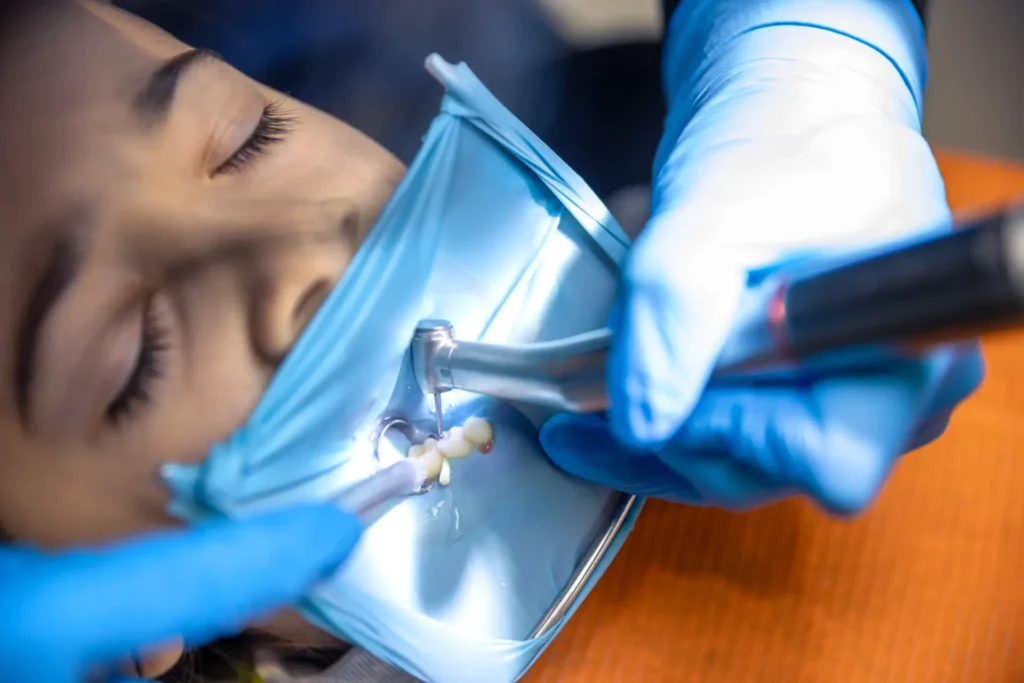
A straightforward front tooth may have simpler anatomy, while a back molar may contain several canals that are narrow, curved or difficult to locate. Infection severity, previous treatment and the amount of healthy tooth remaining can also affect the final plan.
Incisors, Premolars and Molars Have Different Canal Anatomy
Incisors and canines often contain fewer canals and provide easier access. Premolars may contain one or more canals, while molars commonly have several roots and canals. Each canal must be treated fully to reduce the risk of bacteria remaining inside the tooth.
Molars may therefore cost more because they can require:
- More clinical time
- Additional canal-related item numbers
- More complex dental X-rays
- Greater access difficulty
- Treatment over several appointments
- Referral to an endodontist in difficult cases
The exact number of canals cannot always be confirmed from the tooth type alone. X-rays, clinical examination and findings during treatment help the dentist understand the internal anatomy.
Infection and Remaining Tooth Structure Affect the Plan
Root canal therapy is commonly needed when the dental pulp becomes inflamed or infected due to deep decay, cracks, trauma, or repeated dental procedures. Park St Dental Practice explains that treatment removes the infected tissue, cleans the tooth and seals it so the natural tooth can be retained.
Treatment may become more involved when the tooth has:
- A dental abscess
- Long-standing infection
- A deep crack
- Extensive tooth decay
- A large existing filling
- Previous dental trauma
- Narrow or calcified canals
- Limited healthy structure above the gum
- Infection around the tip of the root
These findings do not automatically mean the treatment will cost more, but they may require extra appointments, additional procedures or specialist input.
First-Time Treatment and Retreatment Are Different
A first root canal involves cleaning canals that have not previously been treated. Retreatment is performed when a tooth has already undergone root canal therapy but infection or symptoms have returned.
Retreatment may require the dentist or endodontist to:
- Remove old canal filling material
- Remove or work around an existing crown
- Remove a dental post
- Locate a previously untreated canal
- Manage reinfection
- Repair complications from earlier treatment
Because retreatment may involve more difficult access and anatomy, it can have different item numbers and fees from first-time treatment. Ask whether your insurance policy applies the same endodontic limit to retreatment.
A Filling, Core or Crown May Be Needed Afterwards
Root canal therapy treats the infected tissue inside the tooth, but the tooth still needs to be restored above the gum. Depending on how much structure remains, the dentist may recommend a permanent filling, a core build-up, or a dental crown. Park St Dental Practice states that a root-treated tooth is usually restored with a filling or crown to strengthen and protect it.
A crown is more likely to be discussed when:
- A large part of the tooth is missing
- The tooth has a large existing filling
- The remaining structure is weakened
- The tooth is a molar exposed to strong chewing forces
- A crack affects the tooth
- A secure restoration cannot be achieved with a filling alone
The crown is normally a separate dental procedure with separate item numbers. Your root canal benefit does not automatically confirm that the crown is covered.
General Dentist or Endodontist
Many root canals can be completed by a general dentist. An endodontist is a dental specialist whose practice focuses on diseases and treatment involving the dental pulp and root canal system.
Referral may be recommended for:
- Complex molar anatomy
- Previously treated teeth
- Narrow or blocked canals
- Dental trauma
- Persistent infection
- Difficult-to-locate canals
- Complications during treatment
Specialist fees may be higher because of the difficulty of the case, additional training and equipment used. However, the health fund benefit may not increase by the same amount, so obtain an itemised specialist estimate before proceeding.
How Does Private Health Insurance Pay for Root Canal Treatment?
Private health insurance does not pay for all root canal treatment automatically. You generally need an extras policy that includes the correct dental category. Hospital-only insurance usually does not cover a root canal completed in a normal dental clinic. Healthdirect explains that most dental treatment is not covered by Medicare and that patients usually pay privately or use extras insurance where available. Dental fees also vary because Australian dentists do not follow one standard fee schedule.
Extras Cover Is Usually Needed
Your policy may classify root canal therapy under:
- Endodontic treatment
- Major dental
- A combined major dental and endodontic category
The final crown may sit under major dental even when the root canal itself is classed as endodontic treatment. Diagnostic X-rays and the initial examination may fall under general dental.
A policy that includes general dental alone may contribute to the consultation or X-rays but provide no benefit for the actual root canal.
General Dental, Endodontic and Major Dental Are Different
| Insurance category | Common services | Possible role in root canal care |
| General dental | Check-ups, X-rays, cleans and some fillings | May cover examination, imaging or basic restoration |
| Endodontic | Treatment involving the pulp and root canals | May cover root canal stages |
| Major dental | Crowns, bridges and higher-cost restorations | May cover a crown or root canal under some policies |
| Orthodontic | Braces and tooth alignment | Normally unrelated |
Health funds choose how procedures are grouped, so one fund may classify root canal therapy differently from another. Current Australian insurance guidance confirms that root canal treatment may fall under endodontics or major dental, depending on the policy.
Waiting Periods
A waiting period is the time you must hold the relevant cover before you can claim a benefit. It may apply when you:
- Purchase extras cover for the first time
- Add major dental or endodontic benefits
- Upgrade to a higher level of cover
- Move to a policy with higher benefits
Many private health policies apply a 12-month waiting period to major dental and endodontic treatment. Current policy examples on PrivateHealth.gov.au show 12-month waiting periods, but the exact period must be checked with your own fund. Do not delay treatment of an infected tooth simply to complete a waiting period without discussing the risks with your dentist.
Annual Limits, Sub-Limits and Combined Limits
Understanding policy limits is essential because the headline annual limit may not be the amount available for your root canal.
| Insurance term | What it means |
| Annual limit | Maximum benefit available during the policy year |
| Sub-limit | Smaller maximum applying to one treatment category |
| Combined limit | One shared amount used across several services |
| Per-item benefit | Maximum amount payable for one item number |
| Service limit | Restriction on how often an item can be claimed |
For example, a policy may show a $2,000 major dental limit but provide only a $500 endodontic limit. Another policy may combine endodontic treatment with crowns, oral surgery or other dental services under one smaller pool. Official policy statements contain both separate and combined arrangements.
Fixed Benefits and Percentage Benefits
A fixed-benefit policy pays a set amount for an eligible item. If the dentist charges $500 and the fixed benefit is $150, the patient pays the remaining $350, subject to other rules. A percentage policy may state that it pays 50%, 60% or another percentage. However, the payment can still be restricted by:
- A recognised fee lower than the dentist’s charge
- A per-item cap
- A category sub-limit
- An annual limit
- Provider-network rules
Always ask the health fund for the dollar benefit against each item number rather than relying only on the advertised percentage.
Preferred or Agreement Providers
Some health funds have agreements with selected dental providers. Visiting an agreement provider may result in a different fee, a larger rebate or a smaller gap for certain services. Healthdirect notes that preferred-provider arrangements may offer lower fees or higher benefits but can also restrict the patient’s choice of dentist. Provider status should not be the only consideration. The tooth’s difficulty, the dentist’s experience, continuity of care, specialist-referral needs and the quality of the final restoration also matter.
Pre-Treatment Benefit Estimate
Some health funds use the terms “pre-authorisation,” “pre-approval” or “benefit estimate.” Ask your insurer which process applies to your policy. A pre-treatment estimate may show the expected payment, but it is not always a guarantee. The final claim may depend on:
- Your membership remaining active
- The treatment actually completed
- The dental item numbers submitted
- Benefits already claimed
- Your remaining limits on the treatment date
Request written confirmation where possible and keep it with your treatment plan.
How Can You Calculate Your Out-of-Pocket Cost Before Treatment?
The best way to avoid an unexpected dental bill is to combine an itemised estimate from the dentist with a written benefit estimate from the health fund. The dentist explains the treatment and fees, while the insurer confirms how the policy applies. The Australian Dental Association states that cost information should generally be provided before treatment. It also explains that patients are responsible for contacting their insurer to confirm their benefits and that an estimate may change if further procedures or additional treatment time become necessary.
Step 1 — Obtain an Itemised Treatment Plan
Ask for a plan showing:
- Tooth number
- Proposed root canal stages
- Dental item numbers
- Fee for every item
- Consultation and X-ray costs
- Temporary restoration
- Permanent filling or core crown, if recommended
- Expected number of visits
- Possible endodontist referral
An itemised estimate is more useful than a single total because the health fund may pay different benefits for diagnosis, endodontic treatment and the final restoration.
Step 2 — Use the Exact Dental Item Numbers
Australian dental item numbers describe the service being provided. A complete root canal plan may involve several diagnostic, endodontic and restorative codes. Do not assume that one root canal code covers the full process. Relevant item numbers can vary according to:
- Number of canals
- Treatment stage
- Whether the tooth is being retreated
- Type of X-ray
- Temporary or permanent restoration
- Crown or core requirements
- Specialist care
Use the item numbers supplied by your dentist rather than codes copied from another clinic’s website.
Step 3 — Ask Your Health Fund the Right Questions
Contact the health fund and ask:
- Does my policy include endodontic treatment?
- Is root canal therapy classified as endodontic or major dental?
- Have I completed the waiting period?
- What is my remaining annual limit?
- Is there an endodontic sub-limit?
- What benefit applies to each item number?
- Is the benefit fixed or percentage based?
- Does a recognised fee apply?
- Is a crown covered separately?
- Does my chosen dental provider affect the benefit?
- Have earlier claims reduced my limit?
- Can you send the estimate in writing?
Step 4 — Calculate Every Stage Separately
Consultation, Dental X-rays, Root canal stage one, Root canal stage two, Additional canal items, Permanent filling or core, Crown, if required, and Endodontist consultation. Calculating each stage separately helps you see whether the largest out-of-pocket expense comes from the root canal, the crown, specialist care or a low policy limit.
Step 5 — Recheck the Benefit if the Plan Changes
A treatment estimate may change if the dentist finds:
- An additional canal
- A crack below the existing filling
- Previous root canal material that must be removed
- Too little tooth structure for a filling
- A need for a crown
- A reason to refer you to an endodontist
- A tooth that cannot be predictably restored
The ADA advises that a pre-treatment estimate may increase when further procedures are required or the treatment takes longer than expected. Ask the dentist to explain the clinical change and obtain an updated health fund estimate for any new item numbers.
What Can You Do if Your Insurance Benefit Is Limited?
A small insurance rebate does not always mean the treatment is unnecessary. It means the policy pays only a limited contribution. If the tooth is infected, the clinical risk of postponing care should be considered alongside the financial cost. Discuss the urgency, prognosis and available payment arrangements with the dental clinic rather than delaying care without professional advice.
Do Not Delay Treatment of a Dental Infection Without Advice
An infected tooth does not heal because a waiting period is incomplete. Delaying necessary care can increase pain, swelling and the risk of losing the tooth. Park St Dental Practice severe toothache, dental abscess, swelling and treatment of dental infections among conditions requiring prompt emergency assessment. Its emergency service aims to provide early pain relief, diagnosis and treatment where needed.
Seek urgent dental care if you develop:
- Severe or worsening toothache
- Gum or facial swelling
- Pus around a tooth
- Fever with dental pain
- Difficulty opening the mouth
- Difficulty swallowing
- Difficulty breathing
Difficulty breathing or rapidly spreading swelling requires urgent medical attention.
Ask How Payments Are Divided Across Appointments
Root canal therapy may take more than one appointment, and a crown may be completed later. Ask the clinic:
- Whether payment is due at each visit
- Whether a deposit is required
- When the crown fee is payable
- Which payment methods are accepted
- Whether health fund claims can be processed at the clinic
- Whether a payment arrangement is available
Do not assume that a payment provider or finance option is available unless the clinic confirms it.
Does Medicare Cover a Root Canal?
Medicare does not generally cover routine adult root canal treatment completed in a private dental clinic. Healthdirect states that the Australian Government does not usually cover dental costs and that patients pay most dental expenses themselves.
Eligible adults may be able to access public dental services, but eligibility, treatment availability and waiting times vary. In New South Wales, access is generally linked to concession-card and public dental eligibility requirements.
Child Dental Benefits Schedule
Eligible children aged 0 to 17 may receive assistance through the Child Dental Benefits Schedule. In 2026, the program provides up to $1,158 over two consecutive calendar years and includes eligible root canal services. The child must meet Medicare and government-payment eligibility rules, and restrictions apply.
Parents should confirm:
- The child’s eligibility
- The remaining CDBS balance
- Whether the proposed root canal items are covered
- Any expected personal payment
- Whether the final crown or restoration is eligible
Root Canal or Tooth Extraction?
Extraction may have a lower initial fee, but it removes the tooth. If the space later needs to be restored, further expenses may include:
- Dental implant
- Dental bridge
- Partial denture
- Bone grafting
- Repairs or replacement
- Long-term maintenance
Root canal treatment aims to preserve a tooth that still has a reasonable chance of being restored. Extraction may be appropriate where the tooth is badly cracked, has insufficient remaining structure or has a poor prognosis.
Ask your dentist to compare:
- The root canal and final restoration cost
- The extraction cost
- Whether the missing tooth should be replaced
- The cost of each replacement option
- Expected insurance benefits
- Long-term maintenance requirements
The cheapest immediate procedure is not always the lowest-cost option over several years.
Root Canal Cost Planning at Park St Dental Practice
Park St Dental Practice provides root canal treatment for patients in Mona Vale and across the Northern Beaches. The clinic treats infected or inflamed tooth pulp by removing the affected tissue, cleaning the inside of the tooth and sealing it to help retain the natural tooth. It also provides crown and restorative services when additional protection is required. Because the fee depends on the individual tooth, the dental team must first assess the infection, canal anatomy, and amount of remaining tooth structure.
What the Consultation Can Establish
A root canal consultation may help determine:
- Whether the tooth needs root canal treatment
- Whether it can be predictably restored
- Which X-rays are required
- How many canals may need treatment
- Whether several appointments are likely
- Whether a filling, core or crown may be required
- Whether referral to an endodontist is appropriate
The dentist can also explain other clinically appropriate options when saving the tooth may not be predictable.
Book a Root Canal Assessment in Mona Vale
Persistent toothache, sensitivity, biting pain, swelling, tooth darkening and dental abscess can indicate that the pulp is inflamed or infected, although other dental problems can produce similar symptoms. Park St Dental Practice assesses these problems before recommending treatment. If you have tooth pain or have been told you may need root canal therapy, book a consultation with Park St Dental Practice in Mona Vale. The team can assess the tooth, discuss whether it can be saved and provide an estimated itemised treatment plan for your private health insurance enquiry.
Final Takeaway
A root canal does not have one fixed cost in Australia. A general guide is approximately $900 to $3,400 before private health insurance, with consultation, X-rays, specialist care and a crown potentially adding separate fees. Your insurance payment depends on whether your extras policy includes endodontic or major dental treatment, along with its waiting periods, item benefits and remaining limits. The best way to estimate your gap is to obtain an itemised dental plan and check every item number with your health fund. If you have tooth pain, swelling or a suspected infection, Park St Dental Practice in Mona Vale can assess the tooth and provide an estimated treatment plan without delaying clinically necessary care.