
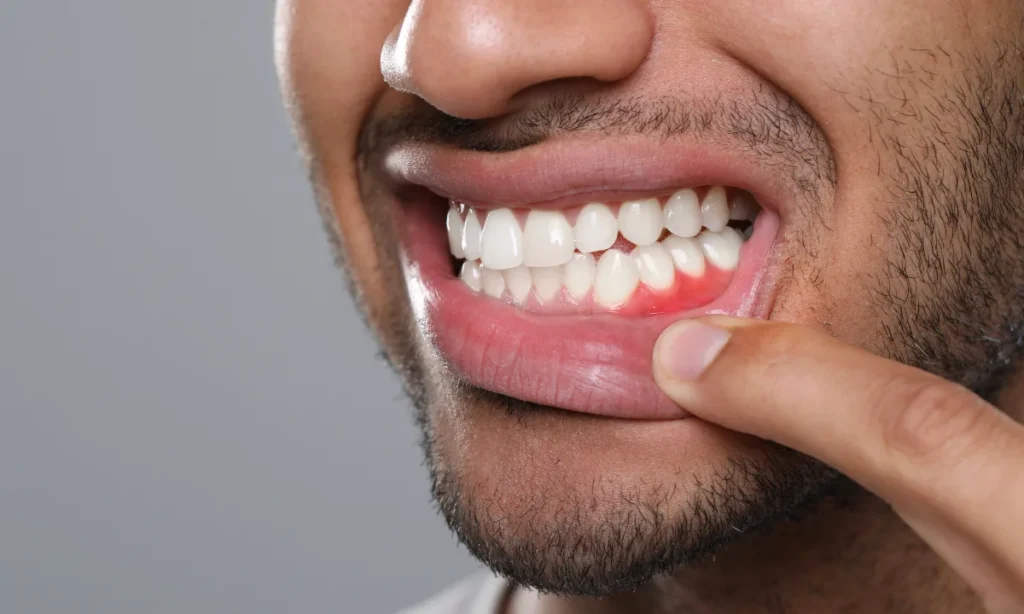
Bleeding when you brush, swollen gums, or persistent bad breath can be easy to dismiss, especially if your teeth do not hurt. Gum disease, however, can progress with few obvious symptoms. It usually begins with gingivitis, where plaque causes inflammation around the gums. In some people, continuing inflammation can develop into periodontitis, where the tissues and bone supporting the teeth are damaged. Once periodontitis is present, dentists classify it from Stage I to Stage IV according to the severity of damage and factors that make treatment more difficult. Gingivitis can usually be reversed with effective plaque control, while periodontitis needs professional treatment and ongoing care to control further damage.
What Is Gum Disease and How Does It Progress?
Gum disease, also called periodontal disease, affects the gums and other tissues that support the teeth. It begins when dental plaque, a sticky biofilm containing bacteria, builds up around the gumline. If plaque is not removed effectively, the gums can become inflamed, red, swollen and prone to bleeding. Plaque can also harden into tartar, or dental calculus, which cannot be removed by ordinary brushing and requires professional cleaning. If inflammation remains limited to the gingiva, the condition is called gingivitis. If disease progresses deeper and begins damaging the periodontal ligament and alveolar bone that support the teeth, it becomes periodontitis.
The progression is better understood as a disease process rather than a simple build-up of tartar. Plaque bacteria trigger an inflammatory response in the gum tissues. In susceptible people, continuing inflammation can contribute to loss of periodontal attachment and supporting bone. Smoking, diabetes, poor plaque control, and some other health or individual risk factors can increase the likelihood or severity of periodontal disease. Importantly, gingivitis does not inevitably progress to periodontitis in every person, especially when plaque and inflammation are controlled early.
Stages of Gum Disease: From Gingivitis to Advanced Periodontitis
People often hear gingivitis described as “Stage 1 gum disease,” but there is an important clinical distinction. Gingivitis is the early inflammatory form of gum disease and occurs before periodontitis. In the current periodontal classification developed by the American Academy of Periodontology and European Federation of Periodontology, Stage I, Stage II, Stage III, and Stage IV refer specifically to periodontitis after it has been diagnosed. Staging reflects the severity of periodontal destruction and factors that affect management.
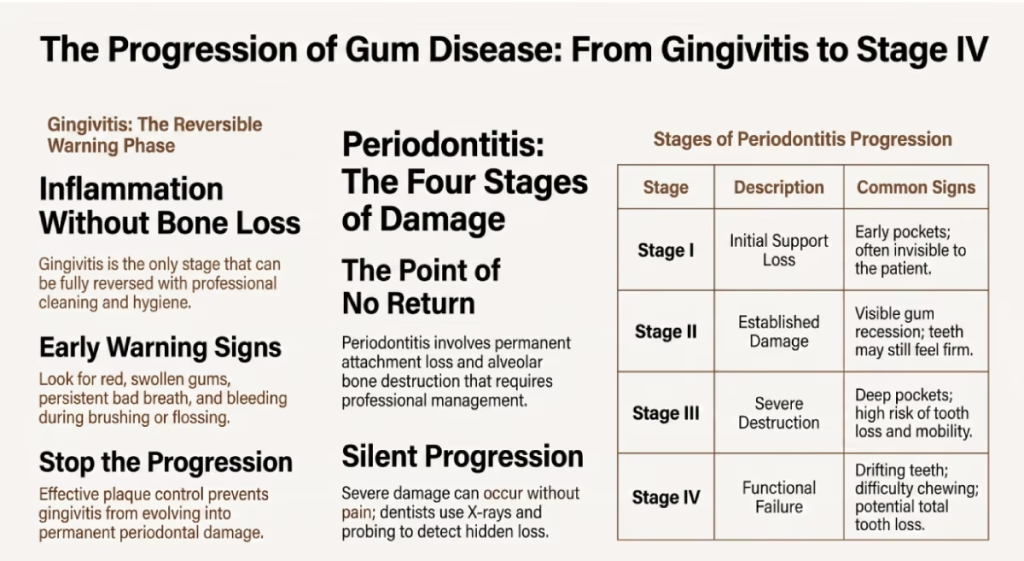
Gingivitis: Gum Inflammation Before Periodontitis
Gingivitis develops when plaque accumulates along the gumline and irritates the gingiva. At this point, inflammation has not yet caused the attachment and supporting-bone loss that defines periodontitis. Common signs include red or swollen gums, bleeding during brushing or interdental cleaning, tenderness, and bad breath. Some people notice only occasional bleeding, which can make the condition easy to ignore. Healthdirect Australia identifies gingivitis as a common, mild form of gum disease and notes that it can be treated before permanent periodontal damage occurs.
This is the point where early action has the greatest value. Effective brushing, cleaning between the teeth, and professional plaque or calculus removal where required can allow plaque-induced gingivitis to return to health. Gingivitis should still be taken seriously because persistent inflammation may progress to periodontitis in susceptible individuals, but bleeding gums do not automatically mean that bone loss has already occurred.
Stage I Periodontitis: Initial Loss of Tooth Support
Stage I periodontitis means the disease has moved beyond inflammation confined to the gums. Early loss of periodontal attachment or supporting bone is now present. A person may still have bleeding gums or early periodontal pockets, but there may be very little visible change and little or no pain. This is one reason periodontitis can remain unnoticed without a periodontal examination. The current AAP classification uses clinical attachment loss, radiographic bone loss and other findings when establishing a periodontitis stage rather than relying on symptoms alone.
At this stage, the aim is to stop further periodontal destruction while the disease is still relatively limited. Early professional management, improved plaque control and attention to relevant risk factors can make a significant difference to long-term stability. A patient cannot accurately diagnose Stage I by checking whether the gums bleed, because gingivitis can also produce bleeding without attachment or bone loss.
Stage II Periodontitis: Established Periodontal Damage
In Stage II periodontitis, damage to the tooth-supporting tissues is more established. Periodontal pockets may be more evident, and there can be greater clinical attachment and bone loss than in Stage I. Some patients notice gum recession, persistent bad breath or food becoming trapped around affected teeth, while others still have surprisingly few symptoms. The teeth may continue to feel firm even though measurable periodontal damage has occurred.
This distinction matters because the apparent appearance of the gums does not always show how much support has been lost beneath them. Redness, swelling and bleeding provide useful warning signs, but staging requires clinical findings. The treatment goal at Stage II is to control inflammation and plaque below the gumline, stabilise the periodontal condition and reduce the chance of further attachment and bone loss.
Stage III Periodontitis: Severe Damage and Risk of Tooth Loss
Stage III periodontitis involves severe periodontal destruction and a greater risk of losing affected teeth. Deeper periodontal pockets, substantial attachment loss and significant alveolar bone loss may be present. Depending on which teeth and areas are affected, patients may also develop gum recession, tooth mobility or changes that make cleaning difficult. The condition may require more advanced periodontal management because deep defects and damaged supporting structures can be difficult to manage with home oral hygiene alone.
Stage III does not automatically mean that affected teeth have to be extracted. If an affected tooth cannot be predictably retained and removal is recommended, knowing what to expect during tooth extraction healing can help you prepare for the recovery period. The prognosis of each tooth depends on the amount and pattern of remaining support, mobility, local anatomy, disease control, and other clinical factors. Treatment aims to control periodontal disease and retain teeth that can be maintained predictably. The dentist may also determine whether referral to a periodontist is appropriate.
Stage IV Periodontitis: Severe Disease with Functional Problems
Stage IV periodontitis represents severe periodontal destruction combined with additional problems that affect the function or stability of the dentition. A patient may have tooth loss caused by periodontitis, loose or drifting teeth, changes in the bite or difficulty chewing. At this point, managing periodontal inflammation may be only one part of the treatment plan because lost function may also need to be addressed.
The European Federation of Periodontology notes that Stage IV cases can involve tooth loss and problems with chewing and may require cooperation between periodontal and other dental disciplines to manage the effects of advanced disease. This is why Stage IV should not simply be described as “very deep gum pockets.” It reflects the overall severity and functional impact of periodontitis.
| Gum disease level | What is happening | Possible signs | Main concern |
| Gingivitis | Inflammation is limited to the gums | Bleeding, redness, swelling, bad breath | Prevent progression |
| Stage I periodontitis | Initial attachment or bone loss | Bleeding, early periodontal pockets | Control early tissue damage |
| Stage II periodontitis | Periodontal destruction is established | Pockets, recession, bad breath | Prevent further support loss |
| Stage III periodontitis | Severe attachment and bone loss | Deep pockets, mobility, recession | Increased risk of tooth loss |
| Stage IV periodontitis | Severe destruction with functional problems | Tooth loss, drifting, bite or chewing changes | Stabilise disease and function |
How Do Dentists Determine the Stage of Gum Disease?
A dentist determines the condition of the gums by combining what can be seen clinically with measurements around the teeth, dental history, and radiographic findings where required. The examination may assess plaque and calculus, redness, bleeding, gum recession, periodontal pocket depths and tooth mobility. Dental X-rays can help show whether supporting bone has been lost. These findings are considered together because no single symptom or measurement tells the whole story.
– Periodontal Probing and Attachment Loss
During a periodontal assessment, a small measuring instrument called a periodontal probe can be placed gently around the teeth to measure the spaces between the gums and tooth surfaces. These measurements help identify periodontal pockets and assess whether attachment around a tooth has been lost. Bleeding during probing can also provide information about inflammation. NIDCR explains that periodontal probing is part of the diagnostic examination for gum disease.
Pocket depth must be interpreted carefully. A deeper measurement can indicate periodontal disease, but it is considered alongside gum position, clinical attachment loss, bleeding, and other findings. This is why a number seen on a periodontal chart should not be interpreted by itself as a specific disease stage.
– Dental X-Rays and Supporting Bone Levels
The gums can be examined directly, but the supporting alveolar bone cannot be fully assessed from appearance alone. Dental X-rays can help the dentist evaluate bone levels around the teeth and identify radiographic bone loss associated with periodontitis. NIDCR includes radiographs as part of gum-disease diagnosis because they can reveal loss of supporting bone that may not otherwise be obvious to the patient. This also explains why someone can have meaningful periodontal disease without severe discomfort. Waiting for pain before having the gums checked can allow disease to progress unnoticed.
Periodontitis Stage vs Grade
Periodontal stage and grade are related but answer different clinical questions. Stage describes how severe the periodontitis is at the time of assessment and how difficult the case may be to manage. The current system uses Stage I through Stage IV. Grade adds information about the rate or risk of disease progression and is commonly recorded as Grade A, B, or C. For a patient, the practical point is simple: two people with periodontal disease that looks similar at one appointment may have different risks for future progression. This is one reason treatment and maintenance plans need to be based on the individual examination rather than a generic schedule.
How Is Gum Disease Treated at Different Levels?
Gum disease treatment depends on whether the patient has gingivitis or periodontitis, how much periodontal damage is present, where the disease is located, and how the tissues respond to treatment. Professional periodontal guidelines use a stepwise approach rather than assigning one procedure automatically to each stage. Treatment usually begins with controlling plaque and relevant risk factors, followed by cleaning below the gumline where required, reassessment, and additional periodontal treatment if disease remains.
Gingivitis: Plaque Control and Professional Cleaning
For plaque-induced gingivitis, treatment focuses on removing the plaque and calculus that are maintaining inflammation and improving daily oral hygiene. This may include professional cleaning, brushing instruction, and advice on cleaning between the teeth. Because gingivitis has not yet caused periodontal attachment or bone loss, it can generally return to health when plaque-related inflammation is controlled. A routine professional clean can be appropriate for gingivitis, but it should not be presented as a complete treatment for established periodontitis. Once the supporting tissues have been damaged, periodontal assessment and treatment are required.
Stage I–II Periodontitis: Non-Surgical Periodontal Treatment
For many patients with earlier periodontitis, treatment includes professional cleaning below the gumline to remove bacterial deposits and calculus from affected areas. Scaling and root planing, often described to patients as a deep clean, is a recognised form of nonsurgical periodontal therapy. It allows the clinician to clean root surfaces and areas inside periodontal pockets that ordinary brushing cannot reach. The American Dental Association supports scaling and root planing as an initial nonsurgical treatment for periodontitis, with treatment decisions based on professional judgement and patient needs.
Treatment also depends on what happens after the initial therapy. The gums are reassessed to determine whether inflammation has reduced and whether problematic periodontal pockets remain. Good daily plaque control is essential because professional treatment cannot remain successful if plaque continues to accumulate around the gumline.
Stage III–IV Periodontitis: Advanced Periodontal Management
More advanced periodontitis may require additional care if deep periodontal pockets, significant bone defects or other problems remain after appropriate initial treatment. Depending on the clinical findings, management may include periodontal surgery, pocket-reduction procedures or regenerative treatment for selected defects. Gum grafting or bone-regenerative procedures may also have a role in specific situations, but these treatments are selected according to the actual periodontal problem rather than simply because a patient has been given a Stage III or Stage IV diagnosis.
Some advanced cases may require assessment by a periodontist, a dentist with specialist training in gum and supporting-tissue conditions. Stage IV treatment can also involve other dental disciplines if tooth loss, bite changes or chewing problems need to be managed. If missing teeth are later replaced with implants, ongoing dental implant maintenance is important for protecting the surrounding gums and supporting bone.
Periodontal Maintenance After Active Treatment
Periodontal treatment does not finish once bleeding reduces or a deep clean has been completed. Periodontitis has a risk of recurrence or further progression, so ongoing periodontal maintenance is important. Follow-up may include reassessing pockets and bleeding, professional plaque and calculus removal, checking home cleaning and reviewing risk factors such as tobacco use or diabetes. EFP guidance includes supportive periodontal care as part of long-term management after active treatment.
It is also important to distinguish a stable periodontal condition from a return to the original healthy tissue levels. Gingivitis can usually be reversed without permanent damage, but bone and attachment already lost through periodontitis do not simply return because inflammation has been brought under control. Healthdirect states that periodontitis can be controlled and that further bone loss may slow or stop with appropriate care.
How Can You Stop Gum Disease From Progressing or Returning?
Daily plaque control remains central whether you are trying to prevent gingivitis from progressing or maintain the result after periodontal treatment. Brush the teeth and gumline thoroughly twice a day, clean between the teeth regularly using a method recommended for your mouth, and attend dental or periodontal reviews at the interval advised for your individual condition. Smoking should also be addressed because tobacco use is a major periodontal risk factor and can reduce treatment success. People with diabetes should continue appropriate medical management because diabetes is also associated with periodontal risk.
The practical priorities are:
- Brush the teeth and gumline twice daily with fluoride toothpaste.
- Clean plaque from between the teeth each day using floss, interdental brushes or another suitable method.
- Attend professional cleaning and periodontal maintenance as advised.
- Avoid smoking and other tobacco use.
- Follow the dentist’s instructions after periodontal treatment.
- Have persistent gum changes assessed rather than waiting for pain.
There is no single recall interval that is right for every patient. Someone with a history of periodontitis may need a different maintenance schedule from a person with healthy gums, so follow-up should reflect disease history and current periodontal risk.
When Should You See a Dentist About Your Gums?
Book a dental assessment if your gums repeatedly bleed when brushing or cleaning between the teeth, remain red or swollen, appear to be receding, or if you develop persistent bad breath. Loose or shifting teeth, pus around the gumline, new spacing, changes in the way your teeth meet or discomfort when chewing need professional assessment as well. Healthdirect recommends seeing a dental professional promptly for swollen or bleeding gums or teeth that feel loose. If swelling, severe pain or signs of infection worsen quickly, emergency dentistry may be appropriate for prompt assessment.
Park St Dental Practice provides general dental check-ups that include gum health assessment, with X-rays when required, professional scaling and cleaning, and periodontal assessment and management, and family dentistry services. The practice has served the Mona Vale community for more than 60 years. If you have noticed ongoing bleeding, recession or other gum changes, a general dental check-up can help determine whether the issue is gingivitis, periodontitis or another condition and what treatment or referral may be appropriate.
Frequently Asked Questions About Gum Disease Stages
Is Gingivitis Stage 1 Gum Disease?
Gingivitis is often described as the earliest form of gum disease, so calling it an early “stage” can make sense in general patient information. Clinically, however, Stage I periodontitis is different from gingivitis. Gingivitis causes gum inflammation without periodontal attachment or bone loss. Stage I periodontitis means that early periodontal tissue destruction has already occurred.
Can Gingivitis Progress to Periodontitis?
Yes. Persistent plaque-related gingivitis can progress to periodontitis in susceptible individuals if inflammation is not controlled, but this does not happen to everyone. Gingivitis can generally be reversed through effective plaque control and professional care before permanent periodontal attachment and bone loss develop.
Can You Have Periodontitis Without Pain?
Yes. Gum disease can become serious before a person notices clear symptoms, and pain is not required for periodontitis to be present. Bleeding, periodontal pockets, gum recession or bone loss may be identified during an examination even when the patient has little discomfort. Regular assessment is therefore more reliable than waiting until a tooth becomes painful.
Can Periodontitis Be Stopped From Getting Worse?
Periodontitis can often be controlled with professional periodontal treatment, effective daily plaque removal, management of relevant risk factors and ongoing maintenance. Healthdirect notes that periodontitis cannot be reversed in the same way as gingivitis, but treatment can control the condition and further bone loss may become very slow or stop.
Can Loose Teeth From Gum Disease Be Saved?
Some loose teeth affected by periodontitis can be retained, but the answer depends on how much periodontal support remains, the amount and pattern of bone loss, mobility, bite forces and whether the disease can be controlled. A loose tooth does not automatically require extraction, but it does need professional assessment so the dentist or periodontist can determine its prognosis and appropriate treatment.
Dr Neda Gorji
Principal Dentist | Implant Dentist
Park St Dental Practice | Dental Implant Centre
Mona Vale, Northern Beaches, Sydney