
Feeling nervous before a dental appointment is common, but for some people the fear becomes strong enough to delay treatment, cancel appointments, or avoid the dentist even when a tooth hurts. Dental phobia can develop after a painful experience, fear of injections or dental procedures, feeling vulnerable in the dental chair, embarrassment about oral health, or reactions to sounds, smells and other triggers. The good news is that dental fear can often be managed. Understanding what triggers the anxiety, telling your dentist about it, staying involved in treatment decisions, using practical coping techniques and getting professional support when needed can make dental care easier to manage.
What Is Dental Phobia, and How Is It Different From Dental Anxiety?
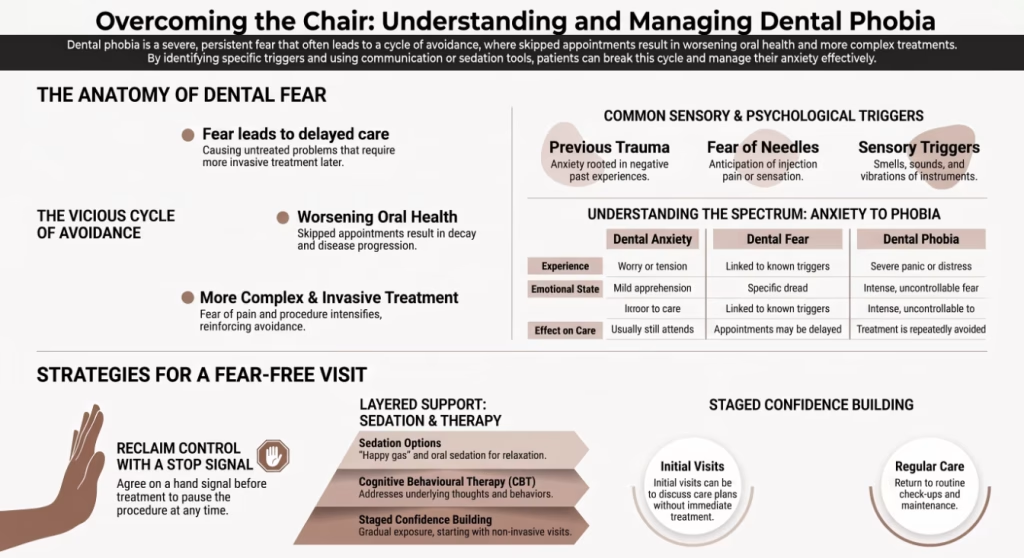
Dental anxiety, dental fear, and dental phobia describe related experiences, but they are not always equal in severity. Dental anxiety may involve worry before an appointment or tension about a particular procedure. A person may still attend appointments despite feeling nervous. Dental phobia, also called dentophobia, is generally used for a much stronger and more persistent fear. The thought of seeing a dentist may trigger intense anxiety, and some people avoid dental care even when they are in pain or know treatment is needed. Cleveland Clinic describes dentophobia as a specific phobia in which going to the dentist can produce an extreme fear response. NHS England also notes that dental anxiety varies between people and between different types of treatment.
| Experience | What it may feel like | Effect on dental care |
| Dental anxiety | Worry, tension or apprehension | The person usually still attends |
| Dental fear | Strong fear linked to a known trigger such as needles or pain | Appointments may be delayed |
| Dental phobia | Severe, persistent fear or panic | Dental treatment may be repeatedly avoided |
These terms can overlap in everyday conversation, so a person should not try to diagnose a phobia from one symptom alone. What matters most from a dental-care point of view is how strongly the fear affects the ability to attend appointments, discuss treatment and receive necessary care.
What Causes Dental Phobia?
There is no single cause of dental phobia. One patient may fear injections, another may feel trapped when lying back in the dental chair, while someone else may associate dentistry with a difficult childhood experience. In many cases, several triggers are present at the same time. Understanding the cause matters because a useful anxiety-management plan should respond to the actual source of fear rather than treating every nervous patient in the same way. Recognised triggers include previous negative experiences, pain, needles, loss of control, embarrassment, sounds, smells and fear of choking or gagging.
A Painful or Traumatic Dental Experience
A previous negative dental experience is one of the strongest reasons a person may become afraid of returning. The experience does not have to involve a major procedure. Pain during treatment, feeling that concerns were ignored, an unexpected injection, difficulty communicating, or a frightening childhood dental visit can leave a lasting association between the dental clinic and danger. The next appointment may then cause anxiety before anything has happened because the person expects the earlier experience to repeat itself.
Childhood experiences can be especially influential because children may not fully understand why a procedure is being performed or why a temporary sensation is occurring. A difficult memory can continue into adulthood even though dental techniques, pain management, and the patient’s ability to communicate have changed. Cleveland Clinic includes past negative or traumatic dental experiences among possible causes of dentophobia.
Fear of Pain, Needles and Dental Procedures
Fear of pain often sits behind dental anxiety, particularly when someone has previously experienced a severe toothache or uncomfortable treatment. The expectation of pain can sometimes become stronger than the actual dental problem. A person may imagine the worst possible outcome before an examination has even taken place. For patients worried specifically about an extraction, knowing what to expect from tooth extraction healing may reduce some of the uncertainty surrounding recovery.
Needles and dental injections can create a separate source of fear. Some people are anxious about seeing the needle, while others worry about the sensation of a local anaesthetic injection or whether the anaesthetic will work. Drilling, suction equipment and unfamiliar dental instruments can add to this fear because the patient may not know what each instrument is used for. Cleveland Clinic identifies pain, needles and dental equipment among common dentophobia triggers.
It is also useful to separate pain control from anxiety control. Local anaesthetic is used to numb an area and control procedural pain. Sedation is used to reduce anxiety, awareness or distress to varying degrees. They may be used together where clinically appropriate, but they do different jobs.
Loss of Control and Feeling Vulnerable in the Dental Chair
Dental care can place a patient in an unusual position. You may be reclined in a dental chair, have instruments in your mouth, and find it difficult to speak normally while treatment is underway. If you do not know what will happen next or do not feel able to pause the procedure, this can create a strong sense of vulnerability.
For some patients, loss of control is more frightening than pain itself. Feeling helpless while lying in the chair is recognised as a possible contributor to dentophobia. This is also why communication and an agreed stop signal can be so useful: they give the patient a clear way to participate in what is happening rather than feeling that treatment is happening without their input.
Embarrassment or Fear of Being Judged About Your Teeth
People who have avoided dental appointments for a long time may feel embarrassed about the condition of their teeth or gums. Concerns about tooth decay, missing teeth, bad breath or visible gum problems can create another barrier to booking an appointment. The longer someone stays away, the more worried they may become about what the dentist will say.
This can form a difficult loop: embarrassment leads to avoidance, avoidance allows oral-health problems to remain untreated, and worsening dental health increases embarrassment. Getting back into a consistent oral hygiene routine can also help rebuild confidence in caring for your teeth between dental visits. Cleveland Clinic also recognises concerns about the appearance of teeth, breath and close physical contact with the dental team as possible contributors to dentophobia.
A useful dental consultation should focus on what is happening now and what can be done next. If embarrassment is the main barrier, tell the dental team before the examination. That gives them useful information about the support you may need.
Dental Sounds, Smells, Vibrations, Gagging or Breathing Concerns
Dental fear is sometimes connected to sensory or physical triggers rather than a previous painful procedure. The sound of a dental drill, vibration from an instrument, the smell of the clinic or the feeling of suction inside the mouth may cause anxiety. A strong gag reflex can create additional worry because the person may fear gagging during an examination, X-ray or procedure. Others become anxious about swallowing, choking or breathing while instruments are in the mouth. These concerns should be discussed rather than hidden. A dentist may be able to adjust positioning, pacing, breaks or the treatment approach depending on the patient’s needs. A genuine breathing problem or medical condition should also be assessed as a physical issue rather than automatically being attributed to anxiety.
Learned Fear and Negative Expectations About Dentistry
Dental fear can also develop without a personally traumatic procedure. Hearing repeated dental horror stories from family members, watching a parent become highly anxious before appointments or growing up with negative descriptions of dentists can shape expectations. Cleveland Clinic refers to this type of learned or modelled fear as one possible pathway to dentophobia.
These expectations can produce anticipatory anxiety. The person begins imagining pain, loss of control or a bad outcome before the dentist has examined the problem. Recognising that expectation is useful because it allows the patient and dental team to replace uncertainty with clear explanations about what is actually planned.
How Dental Phobia Can Create a Cycle of Avoidance
If delayed treatment is accompanied by swelling, severe pain or other warning signs, knowing the common tooth abscess symptoms can help you recognise when prompt dental assessment may be needed. Dental phobia matters because it can change how and when a person receives care. Fear may lead to postponed check-ups, cancelled appointments or waiting until pain becomes difficult to tolerate. During that delay, a problem that may have been easier to manage earlier can progress. The person may then need more treatment than they would have needed at an earlier stage, which can reinforce the belief that every dental appointment involves major procedures.
The pattern can be summarised as:
Dental fear → delayed appointments → untreated dental problems → greater treatment needs → increased fear
Better Health Victoria describes this relationship as a vicious cycle in which anxiety leads to avoidance, while avoidance can allow dental disease to become worse and increase the possibility of more involved treatment. Severe dental anxiety may also produce physical reactions such as a racing heart, sweating, shaking, nausea or panic. These reactions are real responses to perceived threat. If they repeatedly prevent necessary care, additional dental or psychological support may be appropriate.
How to Overcome Dental Phobia
Overcoming dental phobia usually starts with understanding the trigger rather than trying to ignore the fear. Some people benefit from communication and greater control during appointments, while others need relaxation techniques, gradual confidence building, psychological therapy or sedation support. NHS England emphasises that anxiety-management methods should be selected after individual assessment and that behavioural approaches and conscious sedation can be complementary.
Identify Exactly What You Are Afraid of
Before the appointment, try to identify the specific part of dental care that causes the strongest reaction. “I hate the dentist” gives less useful information than “I am frightened of injections,” “I gag when instruments are in my mouth,” or “I panic when I feel I cannot stop the treatment.”
Different triggers call for different responses. Someone worried about losing control may benefit from a stop signal and clear explanations. A patient sensitive to dental sounds may prefer headphones or other distraction. A person afraid because of a previous traumatic experience may need more time to build trust. Persistent phobia that continues despite practical coping measures may need support from a mental-health professional.
Tell Your Dentist About Your Fear Before Treatment Starts
Open communication is one of the most useful steps an anxious patient can take. Tell the dental clinic about your anxiety when booking rather than waiting until treatment has begun. Explain previous difficult experiences, the procedures or sensations that concern you, and anything that has helped during earlier healthcare appointments.
Better Health Victoria specifically recommends letting the dentist know about dental anxiety and discussing individual triggers so that an appropriate management plan can be developed. A conversation before treatment also allows you to ask what will happen, what pain-control methods may be used, how long the procedure is expected to take and whether additional anxiety-management options are available.
Agree on Ways to Stay in Control During the Appointment
A simple stop signal can make a major difference for someone whose fear comes from feeling unable to communicate. Before treatment begins, agree on a hand signal that means “please stop.” Raising a hand is commonly used because the patient may not be able to speak while the dentist is working.
You can also discuss whether short breaks are possible and ask the dentist to explain important steps before carrying them out. Better Health Victoria includes an agreed stop signal among practical techniques for dental anxiety, while NHS England recognises communication, behavioural techniques and staged care as parts of anxiety management. The purpose is not to control every clinical decision. It is to create a clear line of communication, so you know you can signal discomfort or anxiety rather than feeling trapped.
Use Relaxation and Distraction Techniques During Dental Visits
Simple relaxation techniques may reduce the body’s anxiety response during an appointment. Slow breathing can be useful because anxious people often begin breathing quickly or holding their breath without realising it. Guided imagery, meditation and progressive muscle relaxation may also help some patients settle before or during treatment.
Distraction works differently. Instead of focusing on the equipment, sounds or sensations, attention is directed elsewhere. Listening to music through headphones or using another suitable audio distraction may help if dental sounds are a major trigger. Better Health Victoria lists deep breathing, meditation, music-based distraction, guided imagery and progressive muscle relaxation among psychological coping techniques used for dental anxiety. These methods should be viewed as coping tools rather than guaranteed cures for dental phobia. Severe or persistent fear may require additional support.
Rebuild Confidence With Dental Care Gradually
If you have stayed away from the dentist because of fear, the first visit does not have to feel like a test of how much treatment you can tolerate. A consultation can provide an opportunity to explain your concerns, understand your current oral health and discuss what care may be required. Where clinically suitable, care may be planned in manageable stages rather than treating every concern at once. Positive experiences can gradually weaken the expectation that every dental visit will end badly. This approach is different from formal exposure therapy, which is a psychological treatment carried out with appropriate professional guidance.
When Does Dental Phobia Need Professional Support?
Self-help techniques may be enough for mild or situational anxiety, but professional support becomes more important when fear repeatedly prevents necessary dental treatment, causes severe panic or has continued despite attempts to manage it. There is no single method that is right for everyone. NHS England identifies behavioural methods, conscious sedation and, in selected situations, general anaesthesia as different clinical approaches, and stresses the importance of assessing the individual patient.
CBT and Exposure Therapy for Persistent Dental Phobia
Cognitive behavioural therapy, commonly called CBT, can help people recognise thoughts that intensify fear and develop more useful responses to them. For example, a person may automatically think that every injection will be unbearable or that they will have no control once treatment begins. CBT can help examine those catastrophic thoughts and build coping strategies. Exposure therapy is another recognised treatment for specific phobias. Rather than suddenly forcing a person into a feared situation, exposure is controlled and gradual. Cleveland Clinic describes exposure therapy as one of the main psychological treatments used for dentophobia.
A dentist can help manage the dental setting, but persistent phobia may also benefit from assessment by a psychologist or other qualified mental-health professional. Better Health Victoria notes that referral for psychological support, including targeted CBT, can be helpful for dental anxiety and phobia.
Dental Sedation When Anxiety Makes Treatment Difficult
Some patients understand their fear and use communication or relaxation techniques but still find it very difficult to complete dental treatment. In these cases, sedation may be discussed after reviewing the patient’s health, anxiety level and planned procedure.
Common approaches include:
- Nitrous oxide, or happy gas: inhaled through a mask and used to produce relaxation while the patient remains conscious.
- Oral sedation: prescribed medication used to reduce anxiety before treatment.
- IV sedation: sedative medication administered intravenously to produce a deeper level of conscious sedation.
Better Health Victoria notes that severe dental anxiety or phobia may require options such as nitrous oxide, anxiety-relieving medication or conscious sedation, and that medical conditions or medications can affect suitability. Sedation should not be described as a cure for dental phobia. Its main role is to help suitable patients manage anxiety and complete dental treatment. Psychological treatment such as CBT or exposure therapy addresses the fear differently.
Park St Dental Practice provides sedation and sleep dentistry and currently lists inhalation sedation with nitrous oxide, oral sedation and IV sedation among its options for anxious patients. The practice states that the choice of sedation depends on factors including the treatment, level of anxiety and clinical assessment. If fear has been stopping you from receiving dental care, you can discuss whether behavioural anxiety-management methods, sedation or a combination of approaches may be appropriate for you.
Taking the First Step When You Are Afraid of the Dentist
Dental phobia often becomes harder to manage when appointments are postponed for months or years. The first useful step is not to force yourself through treatment without support. Identify the main trigger, tell the dental team about it, agree on ways to communicate during treatment, and discuss the level of help you may need. Some people can return to regular dental care with communication, gradual confidence building and relaxation techniques. Others may benefit from CBT, exposure therapy or clinically appropriate sedation.
Park St Dental Practice has cared for patients for decades and lists gentle care for nervous patients among its services. If dental anxiety is preventing you from booking or completing treatment, contact the practice and explain your concerns before your appointment so the team can discuss suitable options with you.
Frequently Asked Questions About Dental Phobia
Can dental phobia be overcome?
Yes. Many people can reduce dental fear with a combination of better communication, greater control during appointments, relaxation techniques and gradual positive dental experiences. Persistent phobia may also respond to psychological treatment such as CBT or exposure therapy. Sedation may help suitable patients receive necessary dental treatment while anxiety is being managed.
Can one bad dental experience cause dental phobia?
A painful or frightening dental experience can contribute to dental phobia, particularly if the person felt helpless, experienced unexpected pain or had a difficult childhood appointment. However, one negative visit does not automatically cause a phobia in everyone. Dental fear can develop through several pathways and may involve more than one trigger.
Why do I panic before a dental appointment?
Panic before an appointment may happen because your brain expects a threatening experience based on previous memories, feared pain, loss of control or another dental trigger. This anticipatory anxiety can increase your heart rate, breathing and physical tension before treatment has started. If panic regularly prevents you from receiving care, discuss it with your dentist and consider professional psychological support.
What should I tell my dentist if I am scared?
Be specific about what causes the fear. Tell your dentist if you are worried about pain, needles, gagging, sounds, losing control or a past dental experience. Explain what helps you feel safer and agree on a stop signal before treatment. Clear information allows the dental team to plan care around the actual trigger rather than guessing what is making you anxious.
Is dental sedation the same as being put to sleep?
No. “Sleep dentistry” does not always mean that a patient is unconscious. With conscious sedation, a person may remain awake and able to respond while feeling much more relaxed. The level of awareness depends on the sedation method and depth. Park St Dental Practice notes that most forms of sedation used in its practice are intended to reduce anxiety or create a deeply relaxed state rather than automatically making the patient unconscious.
What type of sedation is best for dental anxiety?
There is no single sedation method that is best for every anxious patient. The appropriate option depends on the level and type of anxiety, the planned dental procedure, medical history, current medications and clinical assessment. Nitrous oxide, oral sedation and IV sedation may be considered in different circumstances. Your dentist should assess suitability and explain the benefits, limitations and precautions before treatment.
Dr Neda Gorji
Principal Dentist | Implant Dentist
Park St Dental Practice | Dental Implant Centre
Mona Vale, Northern Beaches, Sydney