
The first few days after a tooth extraction can feel uncertain. You may see a hole where the tooth was, notice swelling around the jaw, or wonder whether the pain is lasting longer than it should. In most routine cases, discomfort begins improving within several days, while the gum and extraction wound often take around one to two weeks to heal. The deeper socket and jawbone continue to repair for several weeks or months. The answer to how long a tooth extraction takes to heal depends on the tooth removed, whether the procedure was simple or surgical, your general health, and how closely you follow the aftercare instructions. The key sign of normal recovery is gradual improvement. Pain, swelling, and bleeding should settle rather than worsen.
Most people feel considerably better within a few days after a routine tooth extraction. The gum and wound often heal over one to two weeks, but deeper bone formation and jawbone remodelling continue for several months. Healthdirect advises that a tooth extraction wound usually takes up to two weeks to heal. Your treating dentist’s instructions should take priority because the procedure and recovery needs differ between patients.
What Is the Tooth Extraction Healing Timeline?
Healing begins immediately after the tooth is removed. A blood clot first forms inside the extraction socket, followed by early repair tissue, gum coverage and gradual bone formation. You may feel recovered enough to work and eat normally before the socket has fully closed, and the gum may look healed while the jawbone is still remodelling underneath.
| Time after extraction | What commonly happens |
| First 24 hours | A blood clot forms; mild bleeding, tenderness and swelling are common |
| Days 2–3 | Swelling and soreness may be most noticeable |
| Days 4–7 | Pain and swelling should generally begin settling |
| Around 1–2 weeks | Gum tissue continues repairing and the site feels much better |
| Following weeks | The visible extraction hole gradually becomes smaller |
| Following months | New bone fills and remodels the deeper socket |
First 24 Hours: The Blood Clot Forms
During the first day, the main healing task is controlling bleeding and allowing a stable blood clot to form. The clot covers the socket, protects the underlying bone and nerve endings, and creates a base for new repair tissue. Mild oozing or blood-stained saliva can be normal, but active bleeding should gradually slow. Your dentist may ask you to bite on gauze for a set period, depending on the procedure and your medical history. Avoid touching the clot with your tongue, fingers or toothbrush. Do not repeatedly remove the gauze to inspect the site, as this can interrupt clot formation. Healthdirect recommends resting, avoiding smoking and alcohol, not rinsing during the first 24 hours, and keeping the head slightly raised.
Days 2–3: Swelling and Soreness May Peak
Swelling can become more noticeable during the second or third day, particularly after surgical extraction or wisdom tooth removal. Mild bruising, jaw stiffness, and tenderness can also occur. These symptoms should remain manageable and begin following an improving pattern after reaching their peak. The socket may develop a white or cream-coloured surface. This can be normal healing tissue and should not automatically be mistaken for pus or exposed bone. Severe, throbbing pain that begins or worsens 1 to 3 days after the extraction, especially when it spreads to the ear or is accompanied by an unpleasant taste, may indicate a dry socket.
Days 4–7: Early Tissue Repair
By the fourth to seventh day, pain and swelling should generally be decreasing. The original blood clot is gradually replaced by granulation tissue, which is an early form of repair tissue containing small blood vessels and cells involved in healing. Eating, speaking and opening the mouth often become easier during this stage. Bruising or mild tenderness can remain, particularly after oral surgery. Dissolving stitches may begin loosening as swelling settles, while non-dissolving stitches may require removal at a planned appointment. Pain that becomes more intense during this stage is not the usual recovery pattern and should be discussed with the dentist.
Around 1–2 Weeks: Gum Tissue Healing
During the first and second weeks, the gum edges gradually grow across the extraction site. Many routine wounds feel substantially better by this point, although the area may still be sensitive if pressed or used for heavy chewing. Healthdirect identifies approximately two weeks as the usual wound-healing period following tooth extraction. The socket does not need to appear completely flat or closed at two weeks. A shallow depression may remain, especially after removal of a molar or wisdom tooth. Larger teeth leave wider sockets, and surgical sites can take longer to develop full gum coverage.
Following Weeks and Months: Socket and Bone Healing
After the gum has started closing, new tissue continues filling the deeper extraction socket. Bone formation and jawbone remodelling occur more slowly than surface gum healing. Research on extraction socket healing describes overlapping repair stages that begin immediately and continue for around six months, with further bone remodelling possible after that period. The visible hole should gradually become smaller and shallower. A small front-tooth socket may close sooner than a large multi-rooted molar socket, while an impacted wisdom tooth site may remain visible for several weeks. Do not probe the hole with a toothpick, fingernail or other object. If cleaning inside a larger socket is required, your dentist should explain the correct method and when to begin.
Why Does Healing Time Vary?
Two people can have teeth removed on the same day and experience very different recovery periods. Tooth size, root shape, surgical difficulty, existing infection, smoking, medical conditions and aftercare can all affect tooth extraction healing time. The number of days since removal is therefore only one part of assessing recovery.
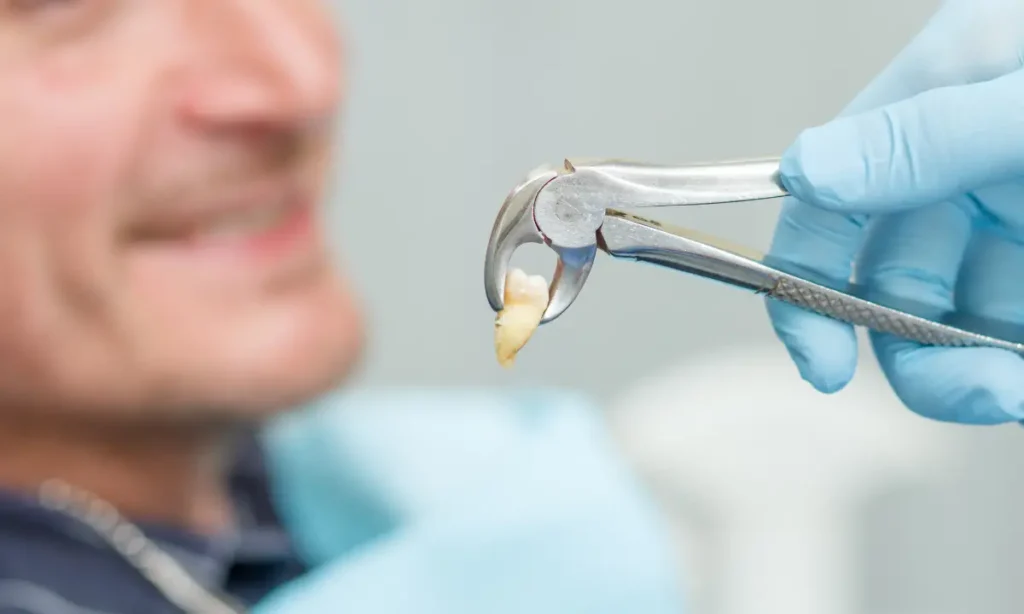
Simple, Surgical and Wisdom Tooth Extractions
A simple extraction generally involves removing a visible tooth without cutting the gum or removing bone. These procedures often cause less swelling and a shorter initial recovery. A surgical extraction may involve a gum incision, dividing the tooth into sections, or removing a small amount of surrounding bone, which can lead to more swelling, bruising, and jaw stiffness. Wisdom tooth removal may be simple or surgical depending on the tooth’s position. Healthdirect explains that lower wisdom teeth can be harder to remove and may require a gum incision, bone removal or tooth sectioning. Patients may need up to a week away from work, although many resume normal activities sooner.
| Extraction type | What it may involve | General recovery pattern |
| Simple extraction | Removal of a visible tooth without major surgical access | Often less swelling and a shorter functional recovery |
| Surgical extraction | Gum incision, tooth sectioning or limited bone removal | More swelling, bruising and jaw stiffness may occur |
| Impacted wisdom tooth removal | Surgical access to a partly or fully trapped tooth | Several days away from normal duties may be needed |
Tooth Size, Position and Number of Roots
Front teeth usually leave smaller extraction sockets because they often have a single root. Premolars may have one or more roots, while molars commonly leave wider spaces with several root areas. Larger sockets require more gum tissue repair and bone regeneration. However, tooth size does not determine recovery on its own. A small broken tooth below the gum may be more difficult to remove than a fully erupted molar. Lower wisdom teeth can also require greater surgical access because they may be trapped in the jawbone or positioned close to nearby structures.
Infection, General Health and Medicines
An infection or dental abscess present before removal can affect the gum and bone around the tooth. The area may remain tender while inflammation settles, but symptoms should still begin improving after the infected source has been managed. Fever, pus or swelling that continues increasing after extraction requires dental review. Diabetes, reduced immunity, blood-clotting conditions, poor nutrition and medicines that affect bleeding or bone turnover may also influence healing. Give your dentist a complete list of medical conditions, supplements and medicines before the procedure. Do not stop blood-thinning medicine or any prescribed treatment unless the prescribing doctor and dentist instruct you to do so.
Smoking, Vaping and Aftercare
Smoking increases the risk of dry socket and can delay healing. The sucking action can disturb the blood clot, while nicotine can reduce blood supply to healing tissues. Healthdirect identifies smoking as a recognised dry socket risk factor, along with difficult extractions, poor oral hygiene and lower wisdom or molar removal. Vaping should not be treated as a safe alternative during recovery because it can involve suction, heat and nicotine exposure. Follow your dentist’s advice about how long to avoid smoking and vaping rather than relying on a fixed minimum period from a general article.
What Should You Do While the Socket Heals?
Good post-operative care protects the blood clot, controls bleeding, reduces irritation and keeps the surrounding mouth clean. It cannot guarantee that every extraction socket will close within the same number of days, but it can reduce avoidable problems and support the body’s normal healing process.
Protect the Blood Clot and Control Bleeding
Use the gauze supplied by your dentist and maintain firm pressure for the period stated in your discharge instructions. Mild oozing or blood-stained saliva may occur during the early stage. Avoid checking the site every few minutes, as repeated disturbance can restart bleeding. Do not sleep with loose gauze in your mouth. Contact the clinic if bright-red bleeding remains active or does not improve after following the pressure instructions. Seek urgent help if bleeding is heavy, fills the mouth quickly or is accompanied by faintness or marked weakness. Healthdirect recommends contacting a dentist if there is a large amount of bleeding after extraction.
Reduce Pain and Swelling
A wrapped cold pack against the cheek may reduce pain and swelling during the early recovery period. Apply it for short intervals rather than placing ice directly on the skin. Keeping your head slightly elevated while resting can also make throbbing and swelling feel less intense. Take pain relief only as directed by your dentist, doctor or pharmacist. Do not place aspirin directly against the extraction socket because it can irritate the gum. Swelling may increase during the first few days, but it should then begin settling. Healthdirect recommends dental review when swelling does not decrease or becomes worse.
Keep the Mouth Clean Without Damaging New Tissue
Continue brushing the teeth away from the extraction site so plaque does not build up. During the earliest stage, avoid brushing directly into the socket. As the gum becomes less tender, cleaning near the area can resume gradually according to the dentist’s advice. Healthdirect recommends avoiding mouth rinsing during the first 24 hours because it may disturb the blood clot. After 24 hours, gentle rinsing with lukewarm salt water may be used after meals and before bed. Swish gently and allow the fluid to leave the mouth without forceful spitting. Use an antimicrobial mouthwash or socket-irrigation syringe only when your dentist recommends it. Starting high-pressure irrigation too soon can disturb early healing tissue.
Choose Foods That Do Not Irritate the Socket
Begin with soft foods that require little chewing. Suitable choices may include yoghurt, soft eggs, mashed vegetables, oats, soft pasta, fish and soup that has cooled to a comfortable temperature. Chew on the opposite side where practical and increase food firmness gradually as tenderness improves.
During early healing, avoid foods that can scratch the wound or become trapped inside a large socket, including:
- Nuts and seeds
- Popcorn
- Crisps
- Hard crusts
- Tough meat
- Sticky sweets
- Very spicy foods
- Very hot food and drinks
- Foods that break into sharp fragments
Pain or fresh bleeding while eating may mean you have progressed too quickly. Healthdirect advises eating soft foods and chewing on the opposite side after tooth removal.
Return to Work, Exercise and Driving Carefully
Some people can return to office work after one or two days following a routine extraction. Physically demanding employment, multiple extractions or wisdom tooth surgery may require several more days. Healthdirect notes that wisdom tooth patients may need up to a week away from work and generally return to normal activities within a week. Avoid strenuous exercise and heavy lifting while bleeding and swelling are active. Resume light movement gradually and stop if activity causes fresh bleeding, throbbing or increased pain. Local anaesthetic alone does not create one universal driving restriction, but sedation, general anaesthesia and certain pain medicines can make driving unsafe. Follow the discharge instructions provided by the clinic. Alcohol should also be avoided during the initial recovery period and while taking medicines that may interact with it. Healthdirect advises avoiding alcohol during the first 24 hours after extraction.
How Can You Tell Whether Healing Is Normal?
A normally healing extraction should follow a gradual improvement pattern. The site may remain tender, look unusual or contain a visible hole, but pain, swelling and bleeding should not become progressively worse after they have begun settling.
| Usually expected | Needs dental review |
| Mild early bleeding or oozing | Heavy or persistent active bleeding |
| Tenderness that gradually improves | Severe pain that increases after several days |
| Swelling that peaks and then settles | Swelling that continues increasing |
| Mild bruising or jaw stiffness | Fever, pus or spreading facial swelling |
| A small visible socket | Intense radiating pain with a foul taste |
| White or cream healing tissue | Worsening pain with foul drainage |
| Gradual return to eating | Difficulty swallowing or breathing |
What Does a Normally Healing Socket Look Like?
A fresh socket may initially look dark because it contains a blood clot. Over the following days, the surface can appear white, cream, pink or red as new repair tissue develops. White tissue is not automatically pus, infection or exposed bone. A shallow hole or indentation can remain for several weeks, especially after a molar or wisdom tooth extraction. The appearance should gradually change as the socket becomes smaller. Colour alone cannot diagnose a complication; increasing pain, fever, pus and worsening swelling are more important warning signs.
Dry Socket
Dry socket, also called alveolar osteitis, occurs when the protective clot does not form properly, becomes dislodged or breaks down too early. It can expose the underlying bone and nerve endings, causing intense throbbing pain that often begins within one to three days and may spread to the ear or eye. Bad breath, an unpleasant taste and swelling around the socket may also occur. Dry socket is not the same as infection, although the symptoms can overlap. A dentist may flush food or debris from the socket and place a medicated dressing to reduce pain. Contact your dental clinic if pain becomes severe after initially appearing manageable.
Possible Infection or Excessive Bleeding
Possible infection signs include pain and swelling that continue worsening, fever above 38°C, pus, persistent foul drainage or facial swelling that spreads beyond the extraction area. Antibiotics are not automatically required for every painful socket; the dentist first needs to identify whether the problem is infection, dry socket or another cause. Light oozing can occur early, but persistent bright-red bleeding that fills the mouth is concerning. Medical conditions and medicines can affect clotting, so tell the treating dentist about any blood-thinning treatment. Healthdirect recommends contacting a dentist for a lot of bleeding, fever, severe ongoing pain or swelling that does not improve.
Persistent Numbness or Sinus Symptoms
Temporary numbness is expected while the local anaesthetic remains active. Persistent tingling, altered sensation or numbness after lower wisdom tooth removal should be reported so the dentist can assess and monitor it. Healthdirect notes that nerve-related changes after lower wisdom tooth surgery are usually temporary, although recovery can sometimes take much longer. Upper molar roots can sit close to the maxillary sinus. Rarely, an opening may remain between the socket and sinus after removal. Contact the dentist if fluid appears to move between the mouth and nose, you notice unusual air movement through the socket or unexpected nasal symptoms develop. Do not test the area by blowing your nose forcefully.
When Is It a Medical Emergency?
Seek urgent medical care if post-extraction swelling causes difficulty breathing or swallowing, spreads into the neck or around the eye, or if bleeding is severe. Call Triple Zero (000) if breathing is affected or the person becomes faint, confused or unresponsive. These symptoms go beyond routine tooth extraction recovery and should not wait for a standard dental appointment.
Tooth Extraction Recovery at Park St Dental Practice
Park St Dental Practice provides family dentistry, children’s extractions, sedation dentistry and surgical and non-surgical wisdom tooth removal from its Mona Vale practice. The clinic has served families across Mona Vale and the Northern Beaches for more than 60 years.
Assessment and Procedure-Specific Aftercare
Before recommending extraction, the dental team may examine the tooth and gum, review your symptoms and medical history, check current medicines and take X-rays such as intraoral images, an OPG or CBCT where required. The dentist can also consider whether the tooth may be saved through another treatment before removal is chosen. Aftercare should reflect the tooth removed, the size of the socket, whether stitches were used, and whether the procedure required surgical access. We explain how to manage gauze, food, cleaning, pain, swelling, activity and follow-up based on the treatment you actually received.
When to Request a Recovery Review
Contact Park St Dental Practice if pain is increasing rather than improving, bleeding is not settling, swelling continues to worsen, fever or pus develops, or severe pain begins radiating to the ear. You should also request advice if stitches cause concern, if numbness persists or if your socket appears different from the discharge instructions.
Park St Dental Practice provides emergency assessments for severe pain, uncontrolled bleeding, dental infection and swelling, with urgent appointments arranged as early as possible. Healing time depends on the tooth, the extraction method and your general health. Park St Dental Practice in Mona Vale can assess whether removal is required, explain the likely recovery and review an extraction site that is not improving as expected.
Final Takeaway
Most people begin feeling better within several days of a routine tooth extraction. The gum and wound commonly heal over one to two weeks, while the deeper socket and jawbone continue repairing for several months. Larger teeth, surgical extractions and impacted wisdom teeth may require a longer initial recovery. Pain, swelling, and bleeding should follow an improving trend. Severe pain beginning after a few days may indicate dry socket, while fever, pus, worsening swelling or heavy bleeding needs dental review. Park St Dental Practice in Mona Vale can assess your recovery and provide treatment if the extraction site is not healing as expected.