
Lying awake beside someone who is snoring loudly can leave you tired, frustrated and unsure what to do. The most practical way to stop someone snoring immediately is to gently move them from their back onto their side and support that position with a pillow. Slightly raising their head and upper body may also improve airflow. These steps can reduce position-related snoring, but no home method can guarantee that the sound will stop completely.
Before trying to quiet the snoring, listen to the person’s breathing. Steady snoring is different from repeated silent pauses followed by choking, gasping or forceful snorts. Those breathing changes may be signs of obstructive sleep apnoea and need proper medical assessment. Healthdirect recommends seeking medical advice when snoring disrupts the household or occurs with choking or gasping during sleep.
What Can You Do About the Snoring Right Now?
Start with simple steps that do not restrict breathing or involve giving the person medicine. Changing their position is usually the easiest action because it can be done straight away and may create more room for air to pass through the throat.
Try these steps in order:
- Listen briefly to check that the person is breathing regularly.
- Gently roll them from their back onto their side.
- Place a pillow behind their back to help them remain on their side.
- Raise their head and upper body slightly if they are comfortable.
- Wake them if breathing repeatedly stops or appears strained.
- Use earplugs or white noise to protect your own sleep if the snoring continues.
Gently Move Them Onto Their Side
Snoring often becomes louder when a person sleeps flat on their back. During sleep, the muscles supporting the throat relax. In a back-sleeping position, the tongue and other soft tissues can move further back and narrow the breathing passage. Air then travels through a smaller space, causing the relaxed tissues to vibrate and produce the snoring sound.
Use a light touch on the shoulder and guide the person slowly onto either side. A body pillow or an ordinary pillow placed behind their back can make it harder for them to roll straight back. Do not push their neck, twist their jaw or use force. Healthdirect includes side sleeping among the lifestyle measures that may help reduce snoring.
Side sleeping may reduce the noise quickly if the snoring is strongly linked to sleeping posture. However, improvement after changing position does not rule out sleep apnoea. Some people with OSA have breathing problems mainly while sleeping on their back, while others experience airway blockage in several positions.
Raise the Upper Body, Not Just the Neck
Slightly elevating the upper body may help some people breathe more comfortably. A wedge pillow can support the shoulders, upper back and head as one unit. This is usually more stable than stacking several soft pillows under the head, which may bend the neck forward and make the person uncomfortable. The goal is a gentle incline rather than a sharp angle. Make sure the person’s face remains clear and that bedding is not pressing against the nose or mouth. Elevation may help position-related snoring or breathing made worse by nasal congestion, but it will not correct every cause of airway narrowing.
Use Nasal Measures Only When the Person Is Awake
A blocked nose can increase breathing resistance and encourage mouth breathing. Colds, hay fever, allergies and sinus problems are recognised causes of snoring. Saline nasal spray may help clear mucus or allergens, while an external nasal strip can gently widen the nostrils. Do not try to apply nasal strips, sprays or other products to someone who is asleep without their knowledge. Wait until they are awake and able to use the product properly. Nasal strips are most likely to help when restricted nasal airflow contributes to the problem. They will not correct an obstruction further down the airway, such as narrowing behind the tongue or soft palate.
A medication-based nasal spray should be used according to its directions or advice from a doctor or pharmacist. Persistent congestion, one-sided blockage or ongoing difficulty breathing through the nose may need assessment by a GP or ear, nose and throat specialist.
Reduce the Noise if the Snoring Does Not Stop
Some measures can make snoring less disruptive without changing the snorer’s breathing. Earplugs, a white noise machine, a fan or sleep headphones may make the sound less noticeable. Sleeping in another room for part of the night can also protect your sleep when you have work, driving or childcare responsibilities the next day. These options are coping tools rather than snoring treatments. They may help the non-snoring partner rest, but they do not widen the airway or address sleep apnoea.
| Option | May Reduce the Snoring | May Help the Partner Sleep |
| Side sleeping | Yes, for some people | Yes |
| Gentle upper-body elevation | Yes, for some people | Yes |
| Nasal strip | Only for certain nasal causes | Indirectly |
| White noise | No | Yes |
| Earplugs | No | Yes |
| Sleeping separately temporarily | No | Yes |
When Does Snoring Need Immediate Attention?
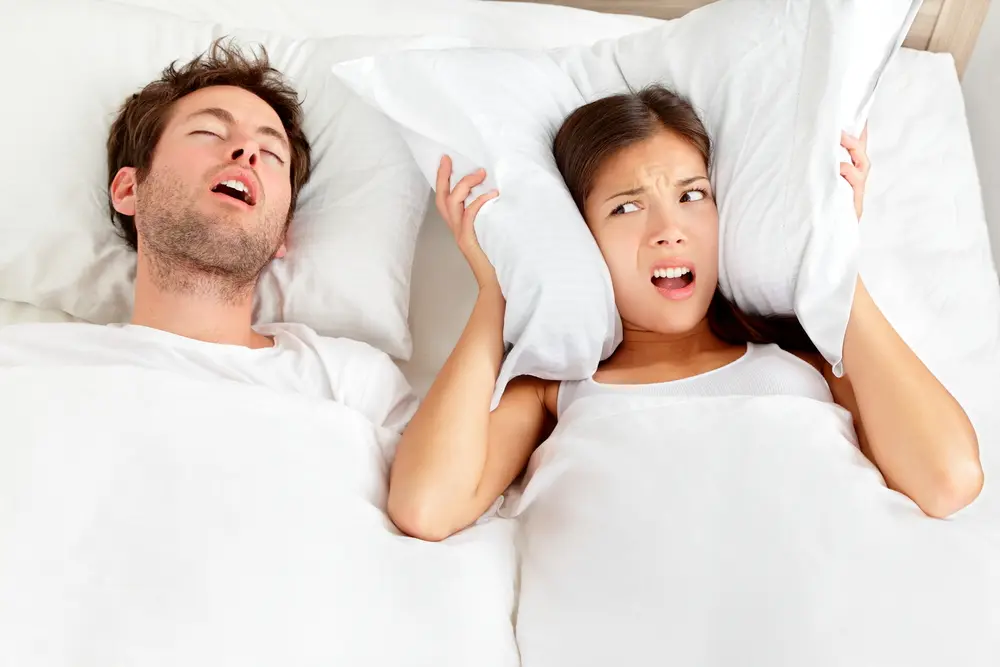
Ordinary snoring involves noisy breathing, but the person continues to breathe. A more concerning pattern involves repeated silence, visible effort to breathe, choking or gasping. Wake the person if their breathing seems interrupted or abnormal rather than simply loud. Obstructive sleep apnoea occurs when the upper airway repeatedly narrows or closes during sleep. Breathing can reduce or stop briefly, oxygen levels may fall and the person may partially wake to reopen the airway. They often do not remember these events in the morning.
Signs of Possible Obstructive Sleep Apnoea
Snoring does not always mean that someone has sleep apnoea. However, the following signs make professional assessment more important:
- Repeated pauses in breathing
- Choking or gasping during sleep
- Loud and irregular snoring
- Sudden snorts after periods of silence
- Restless or broken sleep
- Waking with a dry mouth
- Morning headaches
- Feeling unrefreshed after a full night in bed
- Excessive daytime sleepiness
- Poor concentration or memory
- Irritability or mood changes
- Falling asleep while driving, working or sitting quietly
Healthdirect lists breathing pauses, loud snoring, gasping, choking, restless sleep and daytime tiredness among the main symptoms of OSA. Untreated OSA can also increase the risk of road and workplace accidents due to daytime sleepiness.
Snoring or Sleep Apnoea?
The sound alone cannot confirm whether someone has OSA. A loud snorer may have primary snoring without repeated breathing interruption, while another person with quieter snoring may still have significant airway obstruction.
| Feature | Primary Snoring | Possible Obstructive Sleep Apnoea |
| Snoring pattern | May be steady | Often irregular or interrupted |
| Breathing pauses | Usually not observed | May happen repeatedly |
| Choking or gasping | Uncommon | Important warning sign |
| Daytime sleepiness | May be absent | Common |
| Morning headache | Less typical | Can occur |
| Sleep quality | May remain reasonable | Often unrefreshing |
| Assessment | Depends on severity and impact | Usually requires medical assessment |
| Diagnosis | Clinical review | May require a sleep study |
A partner’s observations can be especially useful because the person experiencing the breathing events may be unaware of them. Healthdirect recommends taking a partner to the medical appointment, where possible so they can describe what happens during sleep.
When to Seek Emergency Help
Repeated breathing pauses during sleep need prompt medical assessment, but they are different from a person who is unresponsive and not breathing normally.
Call Triple Zero (000) immediately if the person:
- Cannot be awakened
- Is unconscious
- Is not breathing
- Is only gasping or breathing abnormally
- Has severe difficulty breathing
- Develops blue or grey colouring around the lips or face
After calling for an ambulance, follow the operator’s instructions. Healthdirect advises starting CPR when a person is unconscious and not breathing or is breathing abnormally, including gasping.
What Might Be Making the Snoring Worse Tonight?
Snoring occurs when relaxed tissues in the throat vibrate as air passes through a narrowed space. The sound may involve the tongue, soft palate, throat walls or nasal airway. The cause can vary from one night to another, which is why the same remedy will not work for everyone.
| Possible Contributor | Clue You May Notice |
| Back sleeping | Snoring reduces after the person rolls onto their side |
| Nasal congestion | Blocked nose, cold, allergies or mouth breathing |
| Alcohol | Snoring is worse after drinking in the evening |
| Sedating medicine | Snoring changed after starting or changing medication |
| Severe tiredness | Snoring is worse after poor sleep or exhaustion |
| Airway anatomy | Snoring happens in most positions and on most nights |
| Weight-related airway narrowing | Snoring has gradually become more frequent |
| Smoking or vaping | Ongoing throat irritation, cough or congestion |
| Pregnancy | Snoring began or increased during pregnancy |
Alcohol can relax the muscles supporting the breathing passage and make snoring worse. Smoking can irritate airway tissues, while a blocked nose can encourage mouth breathing. Healthdirect also identifies pregnancy, certain medicines, back sleeping and living with overweight or obesity as possible contributors. Do not tell someone to stop prescribed medicine based on a snoring episode. If symptoms began after a new medicine or dosage change, they should speak with the prescribing doctor or pharmacist.
Jaw position and oral anatomy can also affect airflow. A lower jaw that sits further back may leave less room behind the tongue. Large tonsils, a large tongue, a narrow airway or other structural features may also increase the chance of obstruction during sleep.
Which Quick-Fix Methods Should You Avoid?
The aim should be to support normal breathing, not simply make the person quieter. Avoid any method that restricts the mouth, nose or chest or involves giving medication without the person’s knowledge.
Do Not Tape Their Mouth Shut
Never tape another person’s mouth while they are asleep. Mouth taping does not identify where the airway is narrowing and may make breathing more difficult if the person has nasal congestion, allergies, a deviated septum or an undiagnosed sleep disorder. It also removes the person’s ability to decide whether they want to use the product. Frequent mouth breathing or snoring should be assessed rather than managed by sealing the lips.
Do Not Block the Nose or Cover the Face
Do not pinch the nostrils, place bedding over the face or use straps that restrict breathing. A sound reduction caused by limiting airflow is not a safe improvement. Keep pillows and blankets away from the nose and mouth, especially after repositioning the person.
Do Not Give Medicine Without Their Knowledge
Never give sleeping tablets, antihistamines, sedatives or any other medicine to a sleeping person. Some medicines and sedating substances can affect breathing or increase muscle relaxation during sleep. Healthdirect notes that certain medicines can contribute to snoring and recommends limiting sleeping pills as part of OSA prevention advice. Prescription medicine should only be changed after discussion with the prescriber. Even over-the-counter products may be unsuitable because of allergies, medical conditions or interactions with other medicines.
Do Not Shake, Hit or Startle the Person
A light touch or calm voice is enough for routine repositioning. Hitting, kicking or shouting can cause injury, distress and conflict without addressing the cause of the snoring. If breathing appears abnormal, wake the person clearly enough to check whether they respond and breathe normally. Safety is more important than avoiding a brief awakening.
Do Not Treat Humidifiers or Essential Oils as Cures
A humidifier may make dry bedroom air feel more comfortable, particularly when the nose or throat feels irritated. It does not move the tongue forward, correct jaw position or prevent the throat from collapsing during sleep. Essential oils do not diagnose or treat sleep apnoea. Strong scents may also irritate allergies or respiratory symptoms. These products should not delay medical assessment when snoring is frequent or accompanied by breathing pauses.
What Should You Do if the Snoring Happens Regularly?
Snoring that occurs most nights, disrupts either person’s sleep or includes gasping and breathing pauses should be assessed rather than managed indefinitely with pillows and nightly nudges. Healthdirect recommends seeing a doctor if snoring affects the person or their household or if choking and gasping occur during sleep.
Record the Pattern for One or Two Weeks
A short record can help identify patterns and provide useful information at an appointment. Note:
- Which nights the snoring occurs
- Whether it is worse on the back
- Whether side sleeping helps
- Any breathing pauses, gasping or choking
- Alcohol use that evening
- Nasal congestion or allergy symptoms
- New or changed medicines
- Morning headaches or dry mouth
- Daytime tiredness
- Changes in mood, memory or concentration
Avoid becoming so focused on recording that you lose sleep every night. A few clear observations are usually more helpful than hours of monitoring.
Use Audio or Video Carefully
A short audio or video recording may help a doctor understand the breathing pattern. Record with the person’s knowledge and consent, and focus on features such as pauses, gasps and position changes rather than sound volume alone. A phone app or recording cannot diagnose sleep apnoea. Diagnosis may require a home sleep study or a supervised study in a sleep clinic, where breathing and oxygen levels are measured during sleep.
Discuss Snoring Without Blame
Raise the issue during the day, when both people are calm. Describe what you have observed instead of accusing the person of keeping you awake deliberately. For example, explain that you noticed pauses followed by gasping or that the snoring became quieter when they moved onto their side. Snoring is an involuntary breathing sound. Treating it as a shared health and sleep issue can make it easier to agree on an assessment. Temporary separate sleeping may also be reasonable when sleep loss is affecting work, driving, parenting or the relationship.
Follow the Right Assessment Pathway
The usual assessment process may include:
- A consultation with a GP or other primary healthcare professional
- Review of symptoms, medicines and medical history
- Examination of the nose, throat and general health
- Referral to a sleep physician when required
- A home or laboratory sleep study
- Diagnosis and severity assessment
- Discussion of CPAP, oral appliance therapy or other treatment
- Dental referral if a mandibular advancement splint may be suitable
Healthdirect explains that a doctor may refer a patient to a sleep clinic or specialist and that a sleep study monitors breathing and oxygen levels.
Which Long-Term Treatment Can Reduce Snoring?
Long-term treatment should match the cause of the snoring. A nasal product may help congestion but will not correct obstruction behind the tongue. An oral appliance may help selected patients but is not suitable for every type or severity of sleep apnoea.
| Situation | Treatment That May Be Discussed |
| Snoring mainly while lying on the back | Side sleeping or positional therapy |
| Nasal congestion or allergies | Medical nasal or allergy treatment |
| Alcohol-related worsening | Reducing alcohol before bed |
| Smoking-related irritation | Smoking cessation support |
| Weight-related airway narrowing | Clinically appropriate weight management |
| Selected muscle-function problems | Myofunctional therapy |
| Primary snoring or selected mild-to-moderate OSA | Custom oral appliance |
| Diagnosed OSA | CPAP, oral appliance or another prescribed therapy |
| Structural airway obstruction | ENT or surgical assessment |
Positional and Lifestyle Management
Side sleeping, maintaining a regular sleep pattern, limiting alcohol before bed, stopping smoking and treating nasal allergies may reduce snoring in some people. Weight management may also help where tissue around the neck and airway contributes to narrowing. These changes can support sleep health, but they should not replace assessment when breathing pauses or severe daytime sleepiness are present.
Nasal and ENT Treatment
Persistent nasal blockage may be linked to allergies, chronic congestion, nasal polyps or a deviated septum. Treatment may involve saline care, allergy management, prescription nasal treatment or an ENT assessment. Large tonsils, adenoids or another structural airway problem may also require specialist review. Healthdirect notes that surgery may be considered for selected people with OSA when an airway problem contributes to snoring, usually after other treatments have not helped.
Myofunctional Therapy and Airway Exercises
Myofunctional therapy uses repeated tongue, mouth and throat exercises to improve muscle function and tongue posture. It may help selected patients over time, particularly as part of a wider treatment plan. These exercises are not an immediate remedy and need regular practice. They should not replace CPAP, oral appliance therapy or another treatment prescribed for diagnosed sleep apnoea.
CPAP Therapy
Continuous positive airway pressure, commonly called CPAP, uses a small pump and mask to deliver gently pressurised air. The pressure helps hold the throat open while the person sleeps.
CPAP is a major treatment for obstructive sleep apnoea and can control OSA and associated snoring when used effectively. The right mask, pressure and support are important because some patients need time to become comfortable using the equipment. CPAP should not be bought or used simply because someone snores. A sleep physician can determine whether it is needed after reviewing symptoms and sleep-study results.
Custom Oral Appliance Therapy
A mandibular advancement splint is a custom oral appliance worn while sleeping. It gently holds the lower jaw forward, which can also help move the tongue away from the back of the throat and increase the available airway space. Oral appliance therapy may be used for primary snoring and selected patients with mild-to-moderate obstructive sleep apnoea. It may also be considered when a patient cannot tolerate CPAP, depending on their diagnosis and clinical recommendations. Healthdirect lists dentist-fitted oral appliances among the treatments used to help keep the airway open during sleep.
A custom appliance is different from a generic anti-snoring mouthguard bought online or from a shop. A dentist needs to assess the teeth, gums, bite and jaw joints before fitting the appliance. The device is then adjusted to balance airway benefit with comfort. Follow-up matters because jaw discomfort, tooth tenderness, bite changes and tooth movement can occur over time. The Sleep Health Foundation recommends regular checks with the dentist who supplied the device. It also notes that oral appliances tend to work best for selected cases of mild-to-moderate OSA, while CPAP may be more suitable for moderate or severe OSA.
Surgery and Specialist Procedures
Surgery is not the standard first response for every person who snores. It may be considered when an examination identifies a specific obstruction involving the nose, tonsils, soft palate, jaw or another part of the airway. The type of specialist involved depends on the suspected cause and may include a sleep physician, ENT specialist or oral and maxillofacial specialist. Results vary, so surgery should never be presented as a guaranteed cure.
Snoring and Sleep Apnoea Care at Park St Dental Practice
Quick position changes may help for one night, but frequent snoring deserves a proper assessment. Park St Dental Practice in Mona Vale provides care for patients affected by snoring and sleep apnoea and offers custom-fitted mandibular advancement splints for suitable patients. These devices hold the lower jaw forward during sleep to help keep the airway more open.
When a Dental Consultation May Be Helpful
A dental consultation may be useful when:
- Snoring occurs frequently
- Snoring disrupts a partner’s sleep
- Primary snoring has been assessed
- Mild-to-moderate OSA has been diagnosed
- CPAP is difficult to tolerate
- A sleep physician has recommended oral appliance therapy
- The patient wants to understand whether their teeth and jaw can support an appliance
- A current appliance feels loose, uncomfortable or ineffective
A dentist does not replace the role of a sleep physician. Patients with possible OSA may need medical evaluation and a sleep study before oral appliance therapy is selected.
How Park St Dental Practice Approaches Oral Appliance Care
Treatment begins with an assessment rather than with providing the same device to every patient. The dental team can examine the teeth, gums, jaw joints, bite, and available space before determining whether a mandibular advancement splint is dentally appropriate. For suitable patients, the appliance is custom fitted and adjusted so that the lower jaw is held in a position that supports airflow while remaining manageable to wear. Follow-up appointments allow the team to review comfort, retention, jaw movement, bite and changes in symptoms.
If snoring is disrupting your sleep or your partner’s rest, contact Park St Dental Practice in Mona Vale to discuss assessment and custom oral appliance options.
Final Takeaway
To reduce someone’s snoring immediately, first check that they are breathing normally and gently roll them onto their side. Supporting the position and slightly raising the upper body may also help. White noise or earplugs can protect your sleep, but they do not treat the airway problem. Never tape the person’s mouth, block their nose or give medication without their knowledge. Repeated breathing pauses, choking, gasping or severe daytime tiredness require medical assessment. For suitable patients, a custom mandibular advancement splint may provide longer-term relief. Park St Dental Practice in Mona Vale can assess dental suitability and discuss oral appliance care as part of an appropriate sleep-health plan.