
Dental implants can feel so natural that many people forget they still need regular care. That is where problems can begin. An implant cannot decay like a natural tooth, but the gum tissue, bone support, implant crown, and nearby teeth still need daily attention. If plaque builds up around the implant, the area can become inflamed, sore, swollen, or infected. The good news is: with the right home routine, regular dental check-ups, and early action when something changes, we can help protect your implant for many years.
At Park St Dental Practice in Mona Vale, we see dental implant maintenance as part of long-term oral health, not just a quick clean after treatment. Our goal is to help patients to keep their implants comfortable, stable, and easy to care for. Whether you already have a single implant crown, an implant-supported bridge, or a full-arch restoration, the way you clean and monitor your implant matters.
Quick Answer: How Do You Maintain Dental Implants Long Term?
Dental implant maintenance means cleaning around the implant every day, attending regular dental check-ups, having professional implant cleaning as advised, and watching for warning signs such as bleeding, swelling, pain, bad breath, or looseness. A healthy implant needs healthy gums and stable bone around it, so maintenance is about protecting the whole area, not just the visible crown.
Here is the simple long-term care routine most patients need:
- Brush twice daily with a soft-bristled toothbrush.
- Use a low-abrasive toothpaste.
- Clean between the implant and nearby teeth every day.
- Use implant-safe floss, interdental brushes, or a water flosser if recommended.
- Attend regular dental implant check-ups.
- Book professional cleaning as advised by your dentist.
- Avoid smoking where possible.
- Manage teeth grinding with a custom nightguard if needed.
- Avoid chewing ice, hard objects, or very sticky foods.
- Contact your dentist early if anything feels different.
What Dental Implant Maintenance Actually Includes
Dental implant maintenance includes home care, professional dental care, gum health checks, bite checks, and monitoring of the implant restoration. Many people think implant care is only about brushing the visible tooth. In reality, the implant crown, gumline, implant fixture, abutment, jawbone support, and surrounding natural teeth all play a part in long-term implant success.
A good implant care routine should answer three questions: Is plaque being removed well? Are the gums around the implant healthy? Is the implant crown, bridge, or denture handling bite pressure properly? If one of these areas is ignored, small issues may become more difficult to manage later.
Caring for More Than Just the Implant Crown
The implant crown is the part you see when you smile, but it is only one part of the system. Under the crown is the abutment, and below that is the implant fixture placed in the jawbone. Around these parts are gum tissue and bone tissue that help hold everything stable. Nearby natural teeth also matter because plaque, gum disease, bite changes, or food trapping can affect the whole area.
This is why we encourage patients to think of dental implant care as gum and bone care. The crown may look clean, but plaque can still sit close to the gumline. If the gum becomes inflamed, the implant area can become harder to clean and more sensitive. Long-term maintenance helps us keep the visible and hidden parts of the implant healthy.
Why Implants Need Different Care From Natural Teeth
Natural teeth and dental implants are similar in how they look and function, but they are not the same biologically. A natural tooth has a ligament around its root, while an implant bonds directly with the bone through osseointegration. This makes implants stable, but it also means they may respond differently to inflammation, pressure, and infection.
A natural tooth can get decay. A dental implant cannot. However, the gum and bone around an implant can still be affected by plaque accumulation and harmful bacteria. That is why daily hygiene and professional monitoring matter even if the implant feels fine.
Dental Implant Aftercare vs Long-Term Implant Maintenance
Dental implant aftercare usually refers to the healing phase after surgery. During that time, the focus is on protecting the surgical site, eating suitable foods, controlling swelling, and allowing the implant to integrate with the jawbone. Long-term dental implant maintenance begins once healing is complete and the implant crown, bridge, or denture is being used every day.
That means the daily routine, check-up schedule, professional cleaning, bite protection, food habits, and warning signs that help protect your implant after treatment is complete.
Why Long-Term Dental Implant Care Protects Implant Lifespan
Dental implants can last many years with the right care, but lifespan depends on more than the implant material. Gum health, bone stability, oral hygiene, bite pressure, smoking, medical health, and regular professional reviews all influence long-term success. A strong implant needs a clean and healthy environment around it. We prefer to prevent implant problems early rather than wait until discomfort appears. Many implant issues begin quietly. A patient may not feel pain while plaque, gum inflammation, or bite pressure is already causing changes. Regular checks help us spot these signs earlier.
Plaque Accumulation Can Trigger Gum Inflammation
Plaque is a sticky film of bacteria that collects on teeth, restorations, and gumlines. Around a dental implant, plaque can gather where the crown meets the gum, under a bridge, around a denture attachment, or between the implant and a natural tooth. If plaque is not removed well, the gum tissue may become red, swollen, or bleed during brushing. Bleeding around an implant should not be brushed off as normal. It may be an early sign that the gum tissue is irritated. In many cases, better cleaning and professional care can help control the problem before it progresses.
Peri-Implant Mucositis and Peri-Implantitis
Peri-implant mucositis means inflammation of the soft gum tissue around a dental implant. It may cause bleeding, swelling, or tenderness. If managed early, it may improve with better cleaning and professional care.
Peri-implantitis is more serious. It involves inflammation around the implant and can be linked with bone loss. Since the implant depends on stable bone support, this is a condition that needs dental attention. The aim of long-term dental implant maintenance is to reduce the risk of these problems and detect early changes before they threaten implant stability.
Bone Stability Matters for Long-Term Implant Success
The jawbone supports the implant fixture. If bone levels change around the implant, the implant may become less stable over time. Bone loss is not always something a patient can see in the mirror, which is why dental check-ups and digital X-rays are important. During implant maintenance, we may compare current images with earlier records to check bone levels and implant position. This gives us a clearer picture of whether the implant is stable or whether further care is needed.
Implant Maintenance Also Protects Your Bite and Restoration
The implant crown, bridge, or denture can experience wear just like other dental restorations. A crown may chip, a screw may loosen, or a bridge may trap food if the shape or contact changes. If you grind your teeth, clench, chew hard foods, or have an uneven bite, extra pressure can affect the implant restoration.
Regular implant reviews allow us to check how your teeth meet, whether the implant crown is under too much force, and whether a nightguard or bite adjustment may help protect the area.
Daily Dental Implant Care Routine at Home
Daily dental implant care does not need to be complicated, but it does need to be consistent. The main goal is to remove plaque from the crown, gumline, and spaces around the implant before it irritates the gum tissue. A good routine should feel realistic enough to follow every day. Most patients need brushing twice daily and interdental cleaning once daily. Some patients also benefit from a water flosser, implant-specific floss, or interdental brushes. The best tools depend on your implant type, gum shape, hand comfort, and the space around your teeth.
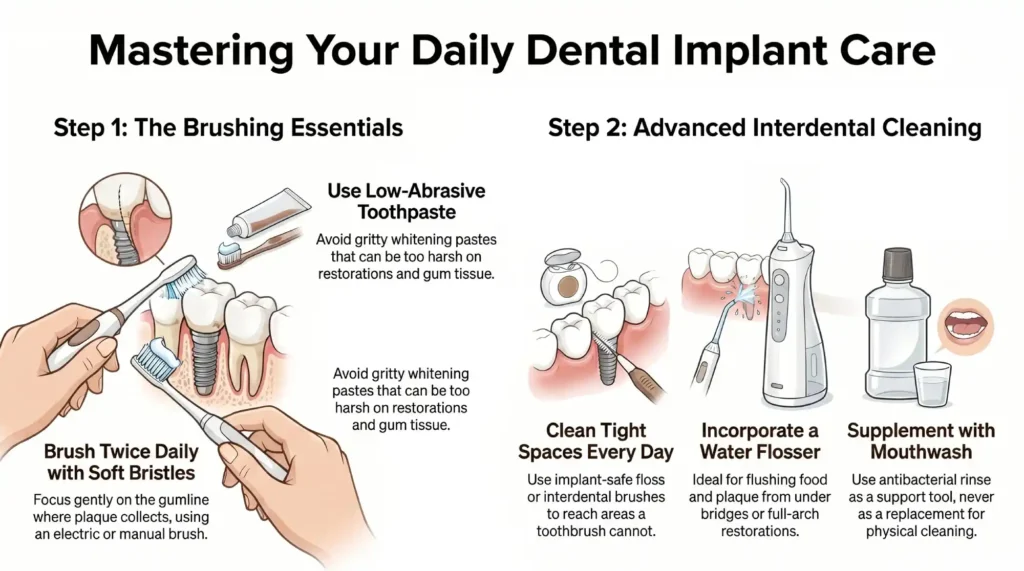
Brush Twice Daily With a Soft-Bristled Toothbrush
Brush the implant crown gently twice a day using a soft-bristled toothbrush or a suitable electric toothbrush. Focus on the gumline because this is where plaque often collects. The aim is not to scrub harder. It is to clean carefully and consistently. If you use an electric toothbrush, let the brush do the work instead of pressing too firmly. Too much force can irritate the gums. Gentle brushing with good technique is usually better than aggressive brushing.
Use Low-Abrasive Toothpaste
A low-abrasive toothpaste is usually a good choice for dental implants because it cleans without being too harsh on restorations or gum tissue. Some whitening toothpastes can be gritty, and over time they may not be ideal for certain crowns, bridges, or delicate areas. If you are unsure which toothpaste suits your implant, ask during your dental check-up. We can recommend an option based on your implant restoration, gum health, and sensitivity level.
Clean Between the Implant and Nearby Teeth Every Day
A toothbrush cannot clean every tight space around an implant. That is why interdental cleaning is so important. Depending on the size of the gap, you may need implant-safe floss, a floss threader, super floss, or an interdental brush. The key is to clean both sides of the implant and the gumline without snapping floss hard into the tissue. If your implant is part of a bridge, you may need to clean underneath the bridge as well. This is one area where many patients miss plaque because it is not easy to see.
Use a Water Flosser for Hard-to-Reach Areas if Advised
A water flosser can be helpful for patients with implant bridges, full-arch restorations, or areas that are difficult to clean with standard floss. It can help flush food particles and plaque from around the gumline and under prosthetic teeth. A water flosser should support your cleaning routine, not replace brushing completely. Some patients still need floss or interdental brushes for better plaque removal. The right mix of tools depends on your mouth and your implant design.
Use Antibacterial Mouthwash Carefully
Antibacterial or antimicrobial mouthwash may help some patients reduce bacterial load, especially if gum inflammation is a concern. However, mouthwash does not remove plaque the same way brushing and interdental cleaning do. It should never become the main cleaning method. If a mouthwash is needed, we prefer to recommend one based on your oral health rather than guessing. Some products are better for short-term use, while others may be suitable for daily support.
Professional Dental Implant Cleaning and Check-Ups
Home care is essential, but professional implant maintenance does what home care cannot. During a dental implant check-up, we can assess gum health, plaque levels, bite pressure, bone stability, and the condition of the implant crown, bridge, or denture. This helps us find early signs of trouble before they become painful or expensive.
At Park St Dental Practice in Mona Vale, we support patients with dental check-ups, professional cleaning, implant reviews, and long-term oral health care. If your implant has not been checked recently, a review can help you understand whether your current routine is working.
How Often Should Dental Implants Be Checked?
Many patients benefit from implant check-ups every three to six months, but there is no one schedule for everyone. A patient with excellent gum health and easy-to-clean implants may need a different recall plan from someone with a history of gum disease, smoking, diabetes, bruxism, or a full-arch restoration. The safest approach is to follow a risk-based plan. If your gums bleed, plaque builds up quickly, or you have a complex implant bridge or denture, you may need more frequent professional maintenance.
What the Dentist Checks During Implant Maintenance
During an implant maintenance visit, we check the gum tissue around the implant, bleeding, swelling, plaque build-up, bite alignment, crown condition, and implant stability. We may also check whether food is trapping around the implant or whether cleaning tools are reaching the right areas. For implant bridges and full-arch restorations, we also look under and around the prosthetic teeth. These areas can collect plaque even when the visible teeth look clean.
Biofilm Removal and Implant-Safe Cleaning
Biofilm is a layer of bacteria that can stick to dental surfaces, including implant restorations. Professional cleaning helps remove plaque, calculus, and biofilm from areas that are difficult to clean at home. Implants need suitable instruments and careful technique. The aim is to clean effectively while protecting the implant surface, gum tissue, and restoration. Some clinics may use advanced biofilm removal systems, such as EMS AIRFLOW or PERIOFLOW technology, where suitable. Your dentist or hygienist can advise which cleaning method is right for your implant type and gum condition.
Food, Lifestyle, and Bite Habits That Affect Implant Health
Your daily habits can affect dental implant longevity. Even with good brushing, implants can be placed under stress by hard foods, smoking, teeth grinding, or poor diet. Long-term care means looking at the full picture, not just the toothbrush. Small changes can make a big difference. Choosing safer foods, protecting your bite, and controlling plaque-friendly habits can reduce the risk of mechanical damage and gum inflammation.
Be Careful With Hard and Sticky Foods
Dental implants are strong, but the implant crown or bridge can still be damaged. Chewing ice, biting popcorn kernels, crunching hard lollies, or using your teeth to open packaging can chip ceramic, loosen components, or place extra pressure on the restoration. Sticky foods can also be a problem if they pull on crowns, bridges, or dentures. You do not need to avoid every firm food forever, but it is smart to be careful with anything that places sudden or excessive force on your implant.
Smoking and Tobacco Use Can Increase Implant Complications
Smoking and tobacco use can affect blood flow to the gums and may increase the risk of inflammation, delayed healing, and implant complications. If you smoke, your implant maintenance plan may need closer monitoring. We approach this without judgement. If you are a smoker with implants, regular check-ups become even more important. We can also help you understand what changes may reduce risk over time.
Bruxism and Teeth Grinding Can Overload Implants
Bruxism means grinding or clenching your teeth, often during sleep. Many patients do not know they grind until a dentist notices tooth wear, jaw tension, or restoration damage. Dental implants do not have the same shock-absorbing ligament as natural teeth, so heavy bite pressure can be a concern. Signs of grinding may include morning jaw soreness, headaches, worn teeth, chipped restorations, or tight facial muscles. If we see these signs, we may discuss bite protection.
A Custom Nightguard May Protect Implants From Pressure
A custom nightguard can help protect implant crowns, natural teeth, and other restorations from grinding forces. It is made to fit your mouth, so it is usually more comfortable and stable than a generic guard. We also provide care for teeth grinding, which makes this a natural part of implant maintenance. If you grind or clench, managing bite pressure may be one of the most important steps in protecting your implant long term.
Mouthguards Matter for Contact Sports
If you play contact sports, a custom-fitted mouthguard can protect your implant crown, nearby natural teeth, lips, and jaw from impact. This is especially important for patients with front-tooth implants or larger implant-supported restorations. A store-bought mouthguard may not fit well around complex dental work. If you have implants, ask your dentist which type of mouthguard is safest.
Diet Still Supports Gum and Bone Health
A balanced diet supports gum tissue, bone health, healing, and general oral health. Calcium-rich foods, vitamin D, lean proteins, vegetables, and good hydration can all support the tissues around your mouth. Frequent sugary snacks and drinks can increase plaque build-up around natural teeth and gumlines. Even though implants cannot decay, the surrounding mouth still needs protection.
Implant Maintenance by Restoration Type
Not all dental implants are cleaned the same way. A single implant crown is usually easier to clean than a full-arch restoration. An implant-supported bridge may need special flossing under the bridge. A removable implant denture has attachments that need separate care.
This is why personalised advice matters. The best care routine depends on the type of implant restoration you have.
| Implant restoration type | Main cleaning focus | Helpful tools |
| Single implant crown | Gumline and both sides of the crown | Soft toothbrush, floss, interdental brush |
| Implant-supported bridge | Under the bridge and around each implant | Super floss, floss threader, water flosser |
| Full-arch fixed restoration | Under the full arch and around implant sites | Water flosser, special brushes, professional cleaning |
| Removable implant denture | Denture surface and attachment points | Denture brush, recommended cleaner, dental review |
Dental Implant Warning Signs You Should Not Ignore
Dental implants should feel comfortable and stable. If you notice bleeding, swelling, pain, movement, bad breath, or a bad taste around an implant, do not wait for it to settle on its own. Early assessment can help identify whether the issue is related to gum inflammation, bite pressure, trapped plaque, or a prosthetic component.
Bleeding When Brushing Around the Implant
Bleeding around an implant may be a sign of gum inflammation. It can happen if plaque has built up around the gumline or if cleaning technique is irritating the tissue. If bleeding continues for more than a few days, or if it happens regularly, book a dental check-up. Healthy implant gums should not bleed often.
Red, Swollen, or Tender Gums
Red, swollen, or tender gums around an implant need attention. This may be an early sign of peri-implant inflammation or irritation from trapped plaque. Do not stop cleaning the area because it is tender. Gentle cleaning is still important, but professional advice is needed if symptoms continue.
Pain, Tenderness, or Discomfort When Chewing
Pain around an implant is not something to ignore. It may be linked with gum inflammation, bite pressure, a loose crown, or another issue that needs assessment. If chewing feels different or uncomfortable, book a review. A small bite adjustment or cleaning intervention may help if the issue is caught early.
Bad Breath, Bad Taste, or Metallic Taste
Persistent bad breath, a bad taste, or a metallic taste near an implant may suggest trapped debris, plaque build-up, inflammation, or infection. These symptoms can be easy to dismiss, but they often mean the area needs a closer look. Professional cleaning and examination can help identify the cause and reduce the risk of further complications.
A Loose Implant Crown, Bridge, or Denture
Sometimes the implant itself is stable, but the crown, screw, bridge, or denture attachment feels loose. This still needs prompt dental care. A loose component can affect your bite and may become more difficult to repair if ignored. Avoid chewing heavily on the area until it has been checked.
The Implant Itself Feels Loose
If the implant fixture feels mobile, contact a dentist quickly. A moving implant is not normal and needs urgent assessment. Do not try to push, twist, or test the implant yourself. Keep the area clean and arrange a dental review as soon as possible.
Common Dental Implant Maintenance Mistakes
Most implant problems do not happen because patients do not care. They often happen because patients were never shown exactly how to clean around their implant type, or because the implant felt fine for years and check-ups became less frequent. Avoiding a few common mistakes can protect your implant and make daily care easier.
Thinking Implants Do Not Need Cleaning Because They Cannot Decay
It is true that implants cannot get cavities. But the gum and bone around an implant can still become inflamed. Plaque control remains essential. A clean implant area supports healthy gum tissue, fresh breath, comfort, and long-term stability.
Cleaning Only the Crown and Ignoring the Gumline
The visible crown is easy to brush, but the gumline is where plaque often causes trouble. Angle your brush gently so the bristles reach the edge where the crown meets the gum. If you have a bridge or full-arch restoration, ask your dental team to show you how to clean underneath it.
Skipping Dental Check-Ups When the Implant Feels Fine
Dental implants may not show obvious symptoms in the early stages of inflammation or bone change. A patient may feel fine while the gum tissue is already irritated. Regular dental check-ups allow us to monitor what you cannot see at home, including bone levels, bite pressure, and restoration wear.
Using the Wrong Tools Around the Implant
Hard brushes, sharp household objects, abrasive products, or poor flossing technique can irritate the gum or damage restorations. Implant-safe tools are a better choice. If your current tools feel awkward, bring them to your appointment. We can show you how to use them or suggest a better option.
Ignoring Grinding, Clenching, or Bite Changes
Grinding, clenching, and uneven bite pressure can place stress on implant crowns and prosthetic components. Over time, this may contribute to mechanical damage. If you wake with jaw tension or notice chips, wear, or pressure around the implant, ask about a bite check and custom nightguard. If you want dental implant maintenance in Mona Vale, contact Park St Dental Practice; our team can book a review or ask about ongoing implant care.
FAQs About Dental Implant Maintenance
How Do I Care for Dental Implants Every Day?
Care for dental implants by brushing twice daily, cleaning between teeth every day, and using implant-safe tools recommended by your dentist. The most important areas are the gumline, spaces between teeth, and any areas under a bridge or full-arch restoration.
How Often Should Dental Implants Be Checked by a Dentist?
Many patients benefit from dental implant check-ups every three to six months. Some people need more frequent visits if they have gum disease history, smoking, diabetes, bruxism, heavy plaque build-up, or complex implant restorations.
Can Dental Implants Get Gum Disease?
Dental implants cannot decay, but the gum and bone around them can become inflamed. This may lead to peri-implant mucositis or peri-implantitis if plaque and inflammation are not controlled.
What Is Peri-Implantitis?
Peri-implantitis is inflammation around a dental implant that may involve bone loss. It is often linked with plaque build-up and needs professional dental care.
What Is the Best Toothbrush for Dental Implants?
A soft-bristled toothbrush or suitable electric toothbrush is usually recommended. The best toothbrush is one you can use gently and consistently around the gumline.
Can I Use a Water Flosser for Dental Implants?
Yes, a water flosser can be helpful around implants, bridges, and full-arch restorations. It should usually be used along with brushing and interdental cleaning, not as the only cleaning method.
Can Teeth Grinding Damage Dental Implants?
Yes, teeth grinding and clenching can place heavy pressure on implant crowns and prosthetic components. A custom nightguard may help protect the implant and nearby teeth.
How Long Do Dental Implants Last With Proper Care?
Dental implants can last many years with good care. Their long-term success depends on oral hygiene, gum health, bone support, bite pressure, lifestyle habits, medical health, and regular professional maintenance.
Final Takeaway
Dental implant maintenance is simple, but it has to be consistent. Clean around the implant every day, protect the gumline, attend regular check-ups, and act early if something changes. The implant crown may look like a natural tooth, but the gum and bone around it need ongoing care to stay healthy.
At Park St Dental Practice in Mona Vale, we help patients protect their dental implants with practical advice, professional cleaning, implant reviews, and long-term oral health care. If your implant has not been checked recently, or if you have noticed bleeding, swelling, discomfort, bad breath, or looseness, book an appointment with our team and let us help you protect your smile.